What causes a car to stall while driving?
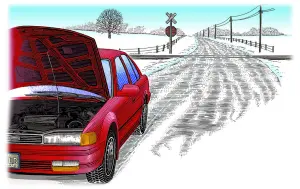
A car stalling in traffic is more than a frustration; it is a critical safety failure. When the engine cuts out, you lose power steering and power brake assist, making the vehicle heavy and dangerous to maneuver. Understanding why this happens requires a systematic approach to diagnostic testing rather than guesswork.
The Fuel Delivery Chain: When the Engine Starves
Your engine is an air-breathing pump that requires a precise fuel mixture to combust. If the fuel supply is interrupted, the engine dies instantly. Think of the fuel delivery system like a garden hose: if someone kinks the hose or turns off the faucet, the water flow stops regardless of how wide you open the nozzle.
- Clogged Fuel Filter: Over time, debris from the gas tank builds up in the filter. If it is blocked, the engine cannot get the pressure it needs. It acts like trying to drink a thick milkshake through a tiny coffee stirrer.
- Failing Fuel Pump: If the pump motor overheats or burns out, fuel delivery stops. This often happens after extended driving as the pump components expand under heat.
- Fuel Injector Issues: A stuck injector prevents proper fuel atomization. If the system loses pressure due to a leaking injector, the engine computer will kill the ignition to prevent a lean misfire.
Ignition and Sensor Pathologies
The ignition system acts as the spark plug for your engine’s internal combustion process. If your engine stalls and refuses to restart, the electrical supply or timing signals are usually at fault.
- Crankshaft Position Sensor (CKP): This sensor tracks piston speed and position. If it sends a bad signal, the engine computer cuts fuel and spark to prevent catastrophic timing damage. It acts like a drummer losing the beat; the entire band stops playing.
- Faulty Alternator: The alternator keeps the battery charged while the engine runs. If it fails, your car runs on battery voltage until it drops below the threshold required for ignition.
- Battery Terminal Connections: Corrosion or loose clamps create an intermittent connection. Imagine a light switch that flickers when you touch it; the same happens to the car’s electronic control unit when voltage cuts out for a millisecond.
Airflow, Vacuum Leaks, and Computer Confusion
Your engine’s computer, or ECU, monitors the air-to-fuel ratio in real-time. If unmetered air enters the engine, the computer’s calculations are invalidated, leading to a stall.
Think of it like following a strict recipe for a cake that calls for exact measurements of flour. If you accidentally pour in a bucket of sand, the cake will fail to rise. A vacuum leak acts as that “sand,” causing the computer to shut down the engine to protect internal components from overheating.
Diagnostic Steps: How to Troubleshoot Like a Pro
Do not wait for a tow truck until you have performed these targeted checks. Professional diagnostics move from simple electrical verification to complex mechanical testing.
- Extracting Diagnostic Trouble Codes (DTCs): Always plug in an OBD-II scanner. Codes like P0300 (random misfire) or P0171 (system too lean) are blueprints for where the fault lies.
- The Fuel Pump Humming Test: Turn the ignition key to the ‘on’ position without starting the engine. You should hear a faint hum from the fuel tank area for two seconds. If there is total silence, your pump or its relay is likely the culprit.
- Battery and Alternator Load Test: Use a multimeter to check battery voltage while the car is idling. You should see between 13.5 and 14.5 volts. If it reads below 12.6, your charging system is struggling to keep the sensors alive.
- Inspect Vacuum Hoses: Visually check rubber hoses near the intake manifold. Listen for a distinct hissing sound while the engine is running. A hiss is a tell-tale sign of air leaking into the system.
Common Mistakes and Field Experience
The most common mistake is assuming a stall was a one-time fluke. If your car cuts out at a stop sign and starts again, treat it as a warning, not an accident.
- Ignoring the Check Engine Light: Even if the car runs smoothly after a restart, the error code is saved in the ECU’s memory. Addressing a faulty sensor today costs a fraction of an engine repair caused by long-term fuel imbalances.
- Overlooking Electrical Grounds: Many modern vehicles stall due to poor chassis grounds. Check for rust or loose bolts near the battery-to-frame connection.
- The ‘Just Add Gas’ Fallacy: Do not assume a stall is always low fuel. If the needle shows a quarter tank but the fuel pump pickup is broken, you could still be starving the engine.
If you lack diagnostic tools or feel uncomfortable working around high-voltage ignition components, seek a professional inspection immediately. Driving a vehicle that stalls randomly creates a high-risk scenario for you and other motorists.
Content updated on 2026-10-17