
Core Technical Specifications of Dual-Basket Air Fryers
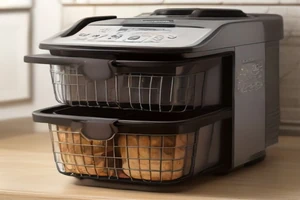
Cooking multiple food groups simultaneously requires independent heating zones. Standard single-basket units suffer from flavor cross-contamination and timing mismatches. Dual-basket air fryers solve this by isolating convection currents into two distinct chambers.
Key technical parameters to monitor include wattage per zone, total cubic capacity, and thermal recovery time. Most units operate between 1400W and 2800W. If the wattage is insufficient, temperature drops significantly when adding frozen items. This prevents the Maillard reaction necessary for crisping.
Critical Hardware Components
Materials directly impact longevity and food safety. Focus on these specifications when comparing models:
- Basket Construction: Look for cold-rolled steel with a non-stick coating. Ensure it is PFOA-free.
- Heating Elements: Stainless steel 304 heating coils offer superior corrosion resistance over aluminum alternatives.
- Control Interface: Capacitive touch glass panels are more reliable than mechanical dials in grease-prone environments.
- Thermal Sensors: Integrated NTC thermistors are required for accurate temperature regulation within 5 degrees Celsius.
Avoid baskets with thin aluminum bases. They warp under high heat, creating gaps in the seal. I frequently see users struggle with uneven cooking due to these structural failures. Always verify the gauge of the basket material before purchase.
Comparing Leading Brands and Engineering Standards
Market leaders differ significantly in their implementation of dual-zone technology. Brands like Ninja utilize independent sensors for each basket. This allows for “Match Cook” or “Smart Finish” functionalities that synchronize two different cooking cycles.
Instant Brands typically provides higher total volume but occasionally lacks the rapid heat recovery speed of premium competitors. When testing for airflow, look for specific fan blade geometries. High-velocity centrifugal fans ensure heat penetrates the food volume uniformly without requiring frequent manual rotation.
Common Integration Errors
Users often ignore the internal volume-to-fan-output ratio. A large basket with an underpowered convection fan results in steamed rather than fried textures. Overloading a basket creates air pockets that block heat flow.
- Limit food layers to a single level for optimal convection.
- Check for rubberized feet on the air fryer base to minimize vibration noise.
- Ensure the rear exhaust port has at least 15cm of clearance for thermal dissipation.
I observe many units failing prematurely because users block the rear exhaust. This causes the internal circuit board to overheat and triggers a thermal fuse shutdown. Maintain the intake vents to prolong the lifespan of the appliance.
Performance Metrics and Longevity
The efficiency of a dual-basket air fryer is measured by its recovery time after basket insertion. Premium models achieve recovery within 60 seconds. Budget models can take up to three minutes, leading to soggy exteriors.
Maintenance requirements are strictly related to the coating technology. Ceramic-based coatings generally tolerate higher dishwasher cycles than standard PTFE solutions. Ensure the heating element is accessible for periodic cleaning. Buildup of aerosolized fats will oxidize over the coils, creating carbon deposits and odors.
- Inspect the basket gasket for signs of thermal fatigue every six months.
- Use silicone-tipped tongs to prevent scratching the inner non-stick coating.
- Calibrate internal temperatures using an external probe once a year if using high-heat cycles frequently.
Prioritize units with modular design components. If the internal fan motor fails, the entire unit becomes electronic waste. Select brands that provide accessible replacement baskets and trays, as these are the high-wear items in any dual-basket air fryer configuration.