The Thermodynamics of Muscle Fiber Contraction
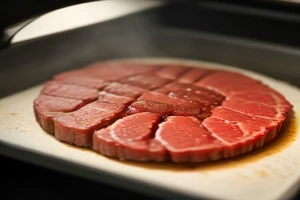
Cutting into a steak immediately after it leaves the grill causes a massive loss of internal juices. Heat induces contraction in muscle fibers, forcing moisture toward the center of the protein. When you apply high-intensity heat, the proteins contract forcefully, squeezing liquid out of the interstitial spaces. If you slice the meat at this peak tension, the liquid flows out onto the cutting board instead of remaining in the tissue. This results in dry, fibrous texture rather than a succulent mouthfeel.
Effective meat resting allows the thermal gradient to stabilize across the cut. As the surface temperature drops, the internal pressure eases. The muscle fibers relax, allowing them to reabsorb the juices that were pushed inward during the cooking process. This redistribution ensures each slice remains hydrated. Ignoring this phase turns a high-quality dry-aged ribeye into a disappointing, chewy experience.
Defining Optimal Resting Durations
Resting time is not arbitrary. It is a function of the protein size, geometry, and the final internal temperature reached. Avoid the common mistake of applying a static five-minute rule to every cut. Large roasts require significantly more time than thin medallions due to the volume of heat mass they retain. Use these technical guidelines for consistent results:
- Small steaks (2-3 cm thick): Rest for 5 to 7 minutes.
- Standard chops and fillets: Rest for 8 to 10 minutes.
- Large roasts (whole tenderloin or prime rib): Rest for 15 to 20 minutes.
- Whole poultry or large bone-in roasts: Rest for 20 to 30 minutes.
Managing Carry-Over Cooking
During the resting phase, carry-over cooking continues to raise the internal temperature of the meat. Large roasts often increase by 5°C to 8°C after removal from the heat source. When I monitor large cuts in a professional environment, I observe that internal temperatures peak approximately four minutes after removal. Failing to account for this leads to overcooked centers, especially in lean cuts like tenderloin.
To optimize the process, remove the protein from the heat when it is 3°C to 5°C below the target internal temperature. The resting period will bring the meat to the desired state while the internal moisture achieves equilibrium. If you wait until the target temperature is met before removing the heat, the final result will invariably be overdone.
- Always use a calibrated digital thermometer to track temperature.
- Place the meat on a warm plate or a wire rack to prevent rapid base cooling.
- Ensure the environment is draft-free to maintain an even temperature gradient.
- Monitor the temperature rise during the first three minutes to predict the final outcome.
The state of the surface proteins is critical. During cooking, particularly at temperatures above 150°C, the Maillard reaction creates flavor compounds. If you trap moisture via tight covering, you destroy the crispness of the exterior. By resting the meat on an elevated wire rack, you allow airflow around the entire cut, preserving the crust integrity while the interior juices settle.