Immediate Protocol: Securing Your Safety During a Breakdown
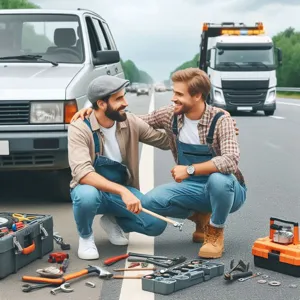
A vehicle breakdown is a high-stakes scenario where your reaction time determines your survival. The moment your car loses power or a warning light flashes, shift your focus from the vehicle to your immediate environment. Your primary goal is to isolate yourself from the flow of traffic.
Use your remaining momentum to glide toward the shoulder. If possible, aim for flat ground away from curves or highway entrances. Avoid stopping in a live lane at all costs. Once stationary, shift to park, engage the emergency brake, and activate your hazard lights immediately. This creates an electronic beacon for other drivers.
The Golden Rule: Visibility and Perimeter Management
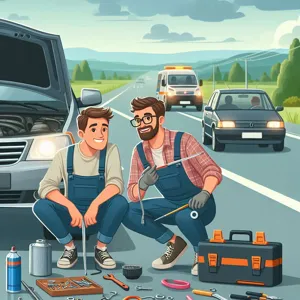
Many secondary collisions happen because drivers remain inside or behind a poorly marked vehicle. Treat your car like an obstacle in a dark room; you must ensure others see it well before they reach it. If you are on a high-speed highway, staying inside with your seatbelt fastened is often the safest option if your car is well off the road.
If you must exit, do so through the passenger side away from traffic. To create a safety funnel, use reflective triangles. Think of these as a warning buffer zone. Place the first triangle ten feet behind your bumper, the second at 100 feet, and the third at 200 feet. This spacing forces oncoming drivers to begin their lane changes long before they reach your position.
Strategic Communication: Requesting Professional Help
Avoid the instinct to perform mechanical repairs on the side of a busy road. Unless you can resolve a flat tire in less than five minutes, call for professional roadside assistance. When you speak to a dispatcher, clarity saves lives. Provide these specific details to speed up your recovery:
- Precise Location: Use GPS coordinates or the nearest highway mile marker.
- Vehicle Identification: Provide the make, model, color, and license plate number.
- Symptom Summary: Describe smoke, stalls, or leaks so the tow operator brings the correct equipment.
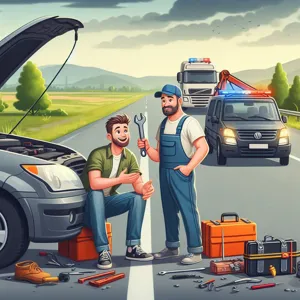
Manage your battery life carefully. Close all non-essential apps and reduce screen brightness to ensure your phone remains functional while you wait for help.
Real-World Lessons: Common Pitfalls to Avoid
Based on accident reports, these specific errors frequently turn minor mechanical failures into major tragedies. Review these scenarios to understand the stakes:
- The Projectile Trap: Never stand behind your vehicle. If a distracted driver drifts, your car becomes a projectile. Stand well ahead of the vehicle, preferably behind a guardrail.
- The Fluid Fallacy: If you see a liquid pooling under your car, do not attempt to drive. This is often a ruptured radiator or an oil line failure. Starting the engine could cause catastrophic internal damage in under ten seconds.
- The False Security of Help: Do not blindly accept assistance from strangers. In isolated areas, keep your doors locked and verify the identity of the person offering help.
Building a Professional-Grade Emergency Kit

A basic kit is insufficient for modern road conditions. You need a self-contained safety station that accounts for unexpected delays. Organize your kit with these essentials:
- High-Visibility Gear: A reflective vest is non-negotiable for night-time visibility.
- Dedicated Light Source: Use a headlamp or flashlight so your hands remain free for repairs or signaling.
- Climate Control: Pack a wool blanket and two liters of water, even in moderate weather. You may be stuck for hours.
- Jump-Starter Pack: Modern lithium-ion packs are small enough to store in a glovebox and eliminate the need for another vehicle to jump-start your battery.
When to Abandon Your Vehicle
Remaining in your vehicle is a strategic choice, not a mandate. If you break down on a blind curve or a high-crime area, staying put may be dangerous. If you witness oncoming traffic failing to slow down or move over, your visibility is insufficient.
In these cases, exit the vehicle immediately and walk to a safe refuge, such as a well-lit business or an emergency call box. Always keep your back to the flow of traffic so you can see vehicles approaching. Prioritize your physical safety over the vehicle’s preservation at every step of the process.
Content updated on 2026-09-11