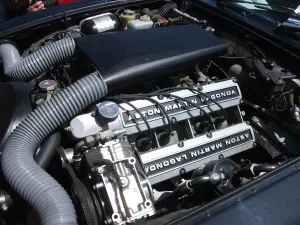
A V8 engine usually has eight spark plugs, one for each cylinder. But there is an important exception: some V8s use two plugs per cylinder, which makes sixteen.
The rule: one plug per cylinder
In a gasoline engine, each cylinder needs a spark to ignite the air-fuel mixture, and in most designs a single plug does the job. So a four-cylinder engine has four plugs, a V6 has six and most V8s, such as Ford’s Coyote 5.0 or the GM small-block family used in Chevrolet and GMC trucks and the Corvette, have eight.
The exception: sixteen plugs
Some V8s use two spark plugs per cylinder, for sixteen in total. The best-known example is Chrysler’s modern HEMI V8 (5.7 and 6.4 liters, found in Ram trucks, Dodge Challenger and Charger, and Jeep Grand Cherokee). Mercedes-Benz used twin-spark heads on several of its V8s from the late 1990s and 2000s as well.
Two plugs per cylinder help the mixture burn faster and more completely in a large combustion chamber. That improves efficiency and emissions and reduces the risk of knock.
Why it matters when you service the engine
If your engine has sixteen plugs, the job takes longer and the parts cost twice as much. Check before buying parts: your owner’s manual, the parts catalog for your exact engine, or simply counting the ignition coils or plug wires will tell you. On HEMI engines, each coil fires one plug directly and the second plug through a short wire.
Plug replacement intervals on modern V8s are long, often 100,000 miles with iridium plugs. Rear plugs on some V8s are hard to reach, especially in vans and tightly packed engine bays, which is why labor costs vary so much between models.
Diesel V8s are different: they have no spark plugs at all, because diesel ignites under compression. They use glow plugs instead to help starting in cold weather.
Doing it yourself
On many V8 trucks, changing plugs is manageable with patience and the right tools. Our guide to what you need to change spark plugs lists the tools and steps. If you notice a rough idle or misfires, the plugs or coils are a common cause, and so is a stall; see why a car stalls while driving.