What does Service Engine Soon mean?
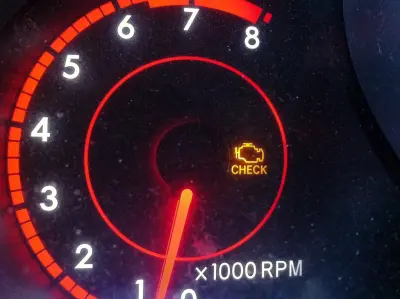
The Service Engine Soon light is not a suggestion; it is a direct notification from your vehicle’s Engine Control Unit (ECU). Think of the ECU as the car’s nervous system. It constantly monitors dozens of sensors to ensure fuel combustion, emissions, and ignition timing are within factory specifications.
When this light illuminates, the ECU has detected a parameter that falls outside of expected limits. While the car may still drive, ignoring this signal is like driving with a slow leak in your tire. It will eventually lead to a blowout or, in this case, a stranded vehicle.
Understanding the OBD2 diagnostic protocol
Every vehicle manufactured after 1996 features an On-Board Diagnostics II (OBD2) port. This is a standard 16-pin connector that serves as a gateway to your car’s digital health records. To interpret these records, you need an OBD2 scanner, which acts as a translator between complex computer hex codes and human-readable diagnostic trouble codes (DTCs).
Advanced scanning techniques:
- Live Data Streams: High-end scanners allow you to view ‘live data’ while the engine is running. Look for oxygen sensor voltages that fluctuate rapidly. If the voltage remains stagnant, you have confirmed a sensor failure without guessing.
- Freeze Frame Data: When a fault occurs, the ECU takes a snapshot of the engine conditions at that exact moment. Check this data to see the engine load, RPM, and temperature when the error triggered.
- Pending vs. Confirmed Codes: A ‘pending’ code means the computer saw a fault once. A ‘confirmed’ code means the fault happened in multiple drive cycles. Always address confirmed codes first.
Technical troubleshooting for persistent codes
Not every code requires a new part. Sometimes, the issue is electrical resistance or a vacuum leak. Before replacing expensive sensors, perform these physical inspections:
- Vacuum Leak Detection: A common cause of lean fuel codes (like P0171) is a cracked rubber hose. Visually inspect all intake boots and vacuum lines for splitting or dry rot.
- Electrical Ground Check: Corrosion at electrical connection points can increase resistance and trick sensors into sending false readings. Clean sensor connectors with electronic contact cleaner before assuming the sensor itself is dead.
- Exhaust Leaks: An exhaust leak before the catalytic converter lets fresh air into the system. This tricks the oxygen sensor into thinking the engine is running lean, causing the ECU to dump excessive fuel.
Common triggers: Beyond the basics
While a loose gas cap is the classic culprit, modern vehicles are sensitive to environmental factors. If you drive in dusty or humid conditions, components like the Mass Airflow Sensor (MAF) can become contaminated with debris.
- MAF Sensor Cleaning: If you see a code related to the MAF, use a dedicated MAF cleaner spray. Do not use brake cleaner or solvents, as these will destroy the delicate thin-film wires inside.
- Catalytic Converter Efficiency: If you see a P0420 code, don’t rush to replace the converter. This code often masks a faulty downstream oxygen sensor or a leaking exhaust manifold gasket.
- Spark Plug and Coil Health: Misfire codes (P0300 series) are often caused by degraded spark plugs. If you have exceeded 60,000 miles since your last plug change, treat them as the primary suspects.
Field experience: What to avoid
A common mistake is the ‘parts cannon’ approach. This is when an owner reads a code, immediately buys a new part, and installs it, only to find the light stays on. The code identifies the symptom, not necessarily the root cause. For instance, an O2 sensor code can be caused by a bad fuel injector or a failing fuel pump starving the engine of pressure.
Pro tips for effective repairs:
- Never clear codes before diagnosis: Clearing the codes deletes the ‘Freeze Frame’ data, which is essential for understanding the conditions under which the fault occurred.
- Document the frequency: Does the light come on only during highway driving? This points to a different set of potential issues than a light that triggers only at idle.
- Identify the flashing light: A solid light indicates a non-emergency fault. A flashing ‘Service Engine’ light indicates a catalytic-damaging misfire. If you see the light flash, pull over safely and turn off the engine immediately.
Taking a systematic approach separates a novice from a technician. By cross-referencing your scan results with physical checks, you will avoid unnecessary part replacements and keep your engine performing at its peak.
Content updated on 2026-10-18