How old is SpongeBob SquarePants? A definitive breakdown
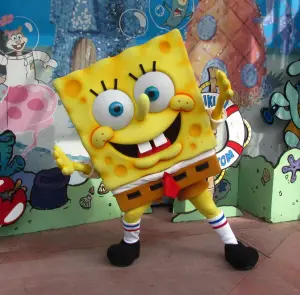
You have likely seen the viral images of SpongeBob’s driver’s license circulating online. It states his birth date as July 14, 1986. If you calculate this against the current calendar year of 2023, the math puts SpongeBob at 37 years old. However, this number ignores the nuances of cartoon production and character development.
Understanding a character’s age requires distinguishing between three separate metrics: the franchise timeline, the internal canon, and the functional behavior. Relying solely on a date printed on a prop document is a common oversight that leads to analytical errors.
The difference between production age and canonical age
The production age refers to when the character first appeared on screen. SpongeBob debuted on May 1, 1999. In this context, the franchise is 24 years old. Think of this like the release date of a software version. While the software updates, its official birth date in the market is fixed.
The canonical age relies on lore created by the writers. When an animator includes a date on a document, they are creating a fixed anchor. It provides the character with a history. This date functions like a house address. Even if the person living inside changes or ages, the physical location remains static on the map.
Behavioral age: The real indicator
If you ignore the math and focus on behavior, the age gap becomes clear. A 37-year-old generally possesses different life priorities than SpongeBob. His enthusiasm for jellyfishing and blowing bubbles mirrors a childlike wonder rather than a mid-life perspective.
Look at how he performs at the Krusty Krab. He shows the focus of a career professional, yet he approaches his social interactions with the naivety of a teenager. In storytelling, we call this the Elastic Reality Principle. It allows a character to possess skills like a master fry cook while maintaining the personality of a student. Think of it like a rubber band: you can stretch the character’s competence, but the personality must snap back to its origin to remain recognizable.
Common analytical errors to avoid
Many fans make the mistake of applying real-world aging logic to animated characters. This is a trap that leads to forced interpretations. Avoid these pitfalls when analyzing character timelines:
- The Maturity Fallacy: Assuming a character must age to gain skills. Development in animation comes from overcoming obstacles, not from birthday candles.
- The Linear Bias: Believing that time must pass linearly in a cartoon. Narrative reality operates on the principle of the permanent present.
- The Document Trap: Treating a prop as a source of absolute truth. Writers often use dates simply to add texture to a scene, not to set a biological clock.
Field experience: Why static ages matter
If you are developing your own narrative content, keeping characters at a specific age range is a strategic necessity. If SpongeBob were to turn 40, his dynamic with Squidward would shift from a comedic friction to a sad, institutionalized workplace scenario.
Keeping a character age-locked protects the show’s chemistry. It ensures that the audience’s expectation of the character remains consistent over decades. In professional storytelling, this is known as managing the brand’s identity. You don’t update the character to match the calendar; you maintain the character to match the audience’s emotional needs.
Final verdict on SpongeBob’s age
So, is SpongeBob 37? In terms of literal documentation, yes. However, in terms of narrative function, he exists in a permanent state of young adulthood. He represents a specific archetype that thrives because he never grows old.
Treat the 1986 date as a piece of world-building lore rather than a biological fact. It anchors him in the world of Bikini Bottom, but it does not dictate his growth. He remains a timeless figure who exists to flip patties, regardless of what the calendar says. Focus on his actions to define his age, not the math on a driver’s license.
Content updated on 2026-10-17