Is the Rise of the Superhero Genre a Good Thing?

The superhero genre has transformed from a niche comic book hobby into the foundation of global cinema. In 2023, franchise-driven blockbusters secured over 60 percent of total North American box office revenue. While this provides fiscal stability for theater chains, you must question if this dominance is sustainable or merely a symptom of creative atrophy. It is time to determine whether this shift represents evolution or a dangerous form of market stagnation.
The Economics of Risk Aversion
Major studios today function like risk-mitigation firms rather than creative hubs. Producing a film with a 200 million dollar budget requires a guaranteed return. Franchises act as insurance policies, essentially functioning like a global coffee chain. You know exactly what the taste will be, whether you are in New York or Tokyo. It is consistent, but it prevents you from ever discovering a unique local blend.
The focus on global marketability means scripts are polished until every unique edge is removed. This process essentially kills the mid-budget film—the 30 to 60 million dollar production that prioritizes character study over franchise expansion. When all financial capital flows into mega-franchises, original storytelling loses its necessary infrastructure. You stop getting new ideas because executives are afraid of anything that does not come with a pre-installed fan base.
Data Analysis of Narrative Fatigue
Market data reveals a growing disconnect between production budgets and audience satisfaction. Between 2018 and 2023, the average audience score for major superhero releases dropped by approximately 15 percent. This is not a failure of special effects technology; it is a symptom of narrative exhaustion. Audiences are signaling a desperate desire for stakes that actually matter.
Field Experience: A common mistake is confusing marketing hype with genuine engagement. A high opening weekend is a metric of successful advertising, not a measure of cultural impact. When you see a high-grossing film, ask yourself if the plot actually evolved. If the story resets to a default state to enable a sequel, you are not watching a film; you are watching an asset management product.
Why Spectacle Fails Without Vulnerability
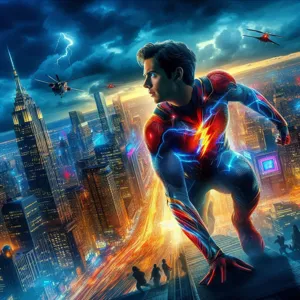
Visual effects have reached a point where physical reality is optional. We can now render hyper-realistic cities and physics-defying combat on demand. However, technology is only a tool, not a substitute for drama. If your protagonist survives a planetary collision without consequence, the narrative tension effectively reaches zero.
Think of this like playing a video game on ‘God Mode’ with infinite health. You might enjoy the visuals for ten minutes, but the lack of risk makes the win feel hollow. For a story to resonate, the hero must possess genuine vulnerability. If there is no possibility of failure, there is no meaningful victory. Without stakes, the audience stops caring about the outcome of the battle.
The Illusion of Inclusivity
Many industry voices argue that the surge in superhero films provides a platform for underrepresented perspectives. While representation is objectively positive, look closely at the structural implementation. These narratives often rely on a rigid ‘hero’s journey’ template to remain digestible for international licensing. The focus is usually on aesthetic diversity rather than a shift in narrative perspective.
- The Continuity Constraint: Characters cannot truly grow or change because they must remain available for the next sequel.
- Template Pacing: Most scripts follow a strict 110-page structure that mandates a world-threatening event in the third act.
- Humor as a Shield: Scripts often inject jokes into moments of trauma to prevent the audience from feeling actual discomfort or sadness.
Practical Steps for a Healthier Media Diet
You have significant influence over the market through your ticket purchases. Studios react strictly to data; if you change your habits, they will adjust their investment strategy. Use these tactics to demand higher quality content:
- The One-for-One Rule: Commit to watching one independent or non-franchise film for every superhero blockbuster you see.
- Identify the Author: Prioritize films led by directors with a distinct visual signature rather than content produced by a corporate committee.
- Measure the Stakes: Before finishing a film, ask if the ending changed the status quo of the universe or if everything returned to exactly how it started.
The Necessary Market Correction
We are currently witnessing a long-overdue market correction. The recent decline in box office returns for formerly ‘fail-proof’ franchises indicates that audience patience is finite. This is not the end of the genre, but it is the end of the era of blind consumption. For the superhero genre to survive, it must stop treating stories as assembly-line products. It needs to pivot toward human-centric narratives where powers serve as background, not as the entire reason for the film’s existence. Your demand for better storytelling is the only force capable of forcing this change.
Content updated on 2026-10-10