Bed bugs are small insects that feed on human blood, usually at night. They are good at hiding, so knowing exactly what to look for (the bugs and the traces they leave) is the first step.
Adult bed bugs
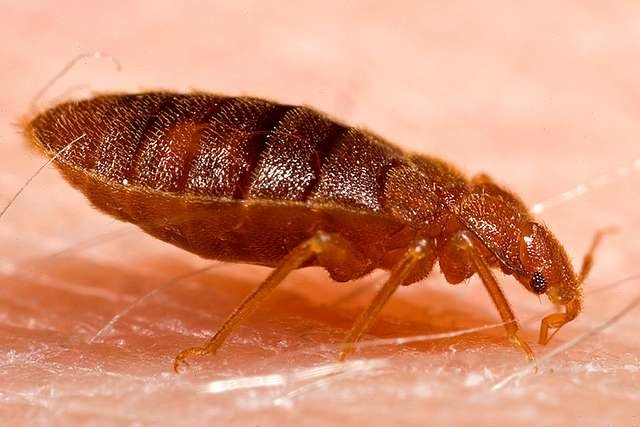
- Size: about 5 to 7 mm long, similar to an apple seed.
- Shape: flat and oval when unfed; after feeding they become swollen, longer and rounder.
- Color: brown to reddish-brown, turning darker red after a meal.
- No wings. They crawl but cannot fly or jump.
- Six legs and two antennae, and a faint musty, sweet smell when there are many.
Nymphs and eggs
- Nymphs (young bed bugs) range from about 1.5 mm to 4.5 mm. They are translucent or pale yellow, and almost invisible until they feed, when a red spot of blood shows inside.
- Eggs are about 1 mm, pearly white, often in clusters in cracks and seams.
Signs of bed bugs (often easier to spot than the bugs)
- Small dark spots on mattress seams, sheets or walls: dried droppings that bleed into fabric like a marker dot.
- Rusty or reddish stains on sheets from crushed bugs.
- Shed skins, pale and empty, left as nymphs grow.
- Bites, often in lines or clusters on exposed skin. Bites alone are not proof: many people do not react, and other insects cause similar marks.
Where to look
Check mattress seams and tags, box spring edges, bed frame joints, headboards, behind loose wallpaper and outlet covers, couch cushions and luggage. A flashlight and a credit card edge help to probe seams.
Look-alikes
- Carpet beetles: rounder, often patterned, and their larvae are hairy.
- Bat bugs and swallow bugs: nearly identical; an expert can tell them apart.
- Cockroach nymphs: longer, faster, with longer antennae.
- Fleas: much smaller, jump, and are linked to pets.
If you find them
- Do not throw out furniture in a panic; you may spread them.
- Wash bedding and clothes in hot water and dry on high heat for at least 30 minutes.
- Vacuum seams and cracks, then seal the vacuum bag in plastic.
- Use mattress encasements designed for bed bugs.
- Call a licensed pest professional. Bed bugs are hard to eliminate alone, and using outdoor pesticides or foggers indoors is dangerous and usually ineffective.
Health notes
Bed bugs are not known to spread disease, according to the CDC. Bites can itch and sometimes cause allergic reactions or infection from scratching; a pharmacist or doctor can advise on creams. The stress and lost sleep are often the bigger problem. The EPA’s bed bug pages cover identification and treatment, and general prevention is in how to prevent pests in your home.