Basketball involves jumping, landing, cutting and sudden stops. The right shoe supports those movements and grips the floor; the wrong one is uncomfortable and may increase the risk of ankle injuries.
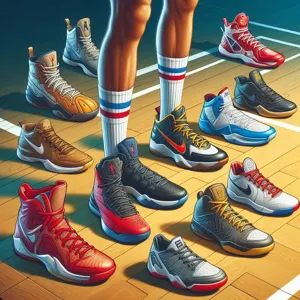
Low, mid or high top?
- Low tops: light and mobile, favored by quick guards. They offer less ankle coverage.
- Mid tops: a balance of mobility and support; the most popular choice.
- High tops: extra coverage around the ankle, preferred by some forwards and centers.
Research has not shown a clear protective effect of high tops alone against ankle sprains. Ankle braces or taping, plus balance training, are more reliable for players with a history of sprains.
Cushioning
Players who jump a lot or are heavier often prefer more cushioning to absorb landings. Lighter, faster players may prefer a lower, firmer setup for court feel. Test the shoe with a few jumps and cuts.
Traction
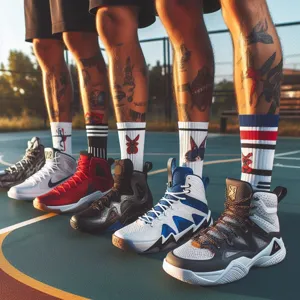
Good traction lets you stop and change direction without slipping. Herringbone and similar patterns are common. Indoor courts that are dusty reduce grip; wiping the soles helps. For outdoor play on asphalt, choose a harder, more durable rubber outsole; soft indoor soles wear out quickly outside.
Fit
Try shoes in the afternoon with the socks you play in. Leave a little space at the toe (roughly a thumb’s width), with no heel slip and a secure midfoot. The shoe should feel stable when you move sideways.
By position and style
- quick guards: lighter, lower shoes with responsive cushioning and excellent traction;
- wings: balanced shoes for cutting, jumping and defending;
- bigs: stable, well-cushioned shoes, often mid or high.
When to replace
Replace shoes when the traction is worn smooth, the cushioning feels flat, or the upper no longer holds your foot. Regular players may need a new pair every few months. Worn shoes are linked to foot and knee pain; see preventing basketball injuries. The right shoes help with quick footwork too.