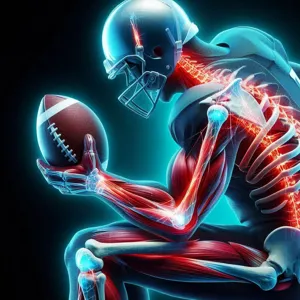
Common Injuries in American Football: A Proactive Approach
Credit : whatcanu.com
American football demands extreme physical performance, but it also places significant stress on the human body. Data shows that injuries occur at a rate of 8.1 per 1,000 athlete exposures in collegiate play. To sustain a career, you must move beyond reactive treatments and implement a systematic injury mitigation strategy.
The Mechanics of Frequent Football Injuries
Injuries generally stem from two sources: acute trauma during collisions or overuse from repetitive high-intensity movements. Understanding these mechanics is your first line of defense.
Ligament Sprains and Muscle Strains
Lower extremity issues account for 50% of all football injuries. Think of a ligament as a steel cable keeping a bridge stable. When a lateral change of direction forces the cable beyond its capacity, the fibers fray. Muscle strains, however, involve damage to the contractile tissue. Incorporate eccentric strengthening—controlled lowering of a weight—to teach your muscles how to absorb energy effectively.
Anterior Cruciate Ligament (ACL) Tears
Credit : whatcanu.com
ACL injuries frequently occur during non-contact events, such as rapid deceleration or poor landing mechanics. Imagine your knee joint as a shock absorber on a car. If you land with stiff, locked legs, the force has nowhere to go but into the joint itself. You must train to land with bent knees to dissipate force through the surrounding musculature.
Concussions and Rotational Force
Head trauma is the most significant concern in modern football. Helmets provide protection against skull fractures, but they cannot prevent the brain from shifting inside the skull due to rotational force. Your best defense is proper tackling form. Keep your chin up and eyes on the target; looking down exposes your neck and head to dangerous impact angles.
Fractures and Deep Tissue Contusions
High-velocity collisions often result in deep tissue contusions or hairline fractures. A contusion is a crushed cluster of capillaries under the skin. If a bruise feels like a hard, immobile mass rather than soft tissue, seek professional imaging. Ignoring these can lead to chronic mobility restrictions and secondary muscle tears.
Evidence-Based Prevention Protocols
Credit : whatcanu.com
Prevention is not about luck; it is about building a resilient physical foundation. Follow these professional protocols to harden your body against the demands of the gridiron.
The 10% Rule for Progressive Conditioning
A common error is overloading the body too quickly. To avoid failure, increase your training intensity or volume by no more than 10% per week. This allows your tendons—which have limited blood flow compared to muscles—time to adapt to the new stress. If you rush, your muscles will grow, but your connective tissues will eventually snap under the pressure.
Dynamic Warm-Up Systems
Avoid static stretching before competition, as it reduces explosive power output. Use a dynamic warm-up to prepare your nervous system. Spend 15 minutes on lateral shuffles, walking lunges, and hip rotations. This process warms your joints like an engine oil change, increasing the synovial fluid that lubricates your range of motion.
Hydration and Physiological Efficiency
Credit : whatcanu.com
Dehydration forces your heart to work harder to oxygenate your muscles, leading to premature fatigue. When you tire, your technique degrades, opening the door for injury. Use this simple metric: weigh yourself before and after practice. Replace every pound lost with 20 ounces of water and electrolyte solution to maintain your cognitive and physical edge.
Avoiding the Return-to-Play Trap
The week after returning from an injury is the period of highest risk. Athletes often return too early due to pressure, leading to compensatory injuries. You must pass functional testing before full clearance. If you are still thinking about your injury during a cut or sprint, you are not ready. Use objective force-plate data or strength tests rather than subjective feelings of pain-free days.
Common Field Mistakes to Avoid
Playing through minor pain is a tactical error that leads to long-term issues. When you favor a sore ankle, you subconsciously shift weight to the other leg. This behavior causes a cascade of issues, typically leading to a hip or knee injury on the opposite side. Treat the source of the pain immediately. If the issue is joint-related, skip the foam roller and consult a physical therapist. Missing one week for recovery is always cheaper than missing four months for surgical intervention. Consistency in maintenance is your greatest performance enhancer.