Technical Criteria for Football Equipment Selection
Credit : whatcanu.com
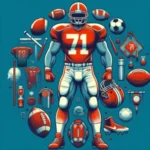
Choosing football equipment is a technical exercise in risk management and performance optimization. You are not just buying gear; you are selecting a protective system that influences your biomechanics and injury prevention. A systematic approach to fit, material engineering, and surface-specific traction is mandatory for any serious player.
The Biomechanics of Protective Gear
Credit : whatcanu.com
Protective equipment must act as a secondary shock-absorption layer. If your helmet or shoulder pads move during contact, they fail to disperse energy effectively. Think of a poorly fitted helmet like a car airbag that deploys two inches too far from your body; it cannot stop the momentum before it reaches you.
Helmet Integrity: Look for the NOCSAE (National Operating Committee on Standards for Athletic Equipment) certification. Ensure the padding system provides uniform pressure around the cranial circumference. If you can slide a finger between your temple and the padding, the fit is structurally compromised.
Shoulder Pad Positioning: The epaulets (the hard top cap) should cover the deltoid muscle completely. If the pad shifts during arm elevation, it will restrict your range of motion and potentially leave your clavicle exposed during a collision.
Mouthguard Density: Use a dentist-molded guard. It acts as a shock absorber for your temporomandibular joint (TMJ). A loose, generic mouthguard requires you to clench your jaw continuously to hold it in place, which causes unnecessary facial muscle fatigue.
Surface-Specific Traction: Engineering Your Footing
Your cleats serve as the interface between your kinetic energy and the ground. Using the wrong stud configuration is a major contributor to non-contact ACL and MCL injuries. The goal is to maximize traction without creating excessive rotational resistance.
Firm Ground (FG): Designed for natural grass. The studs are longer and bladed or conical to penetrate deep soil. Using FG cleats on artificial turf causes the studs to ‘catch’ rather than release during a pivot, placing massive torque on your knee ligaments.
Artificial Grass (AG): These cleats feature a higher number of smaller, shorter studs to distribute pressure evenly. This prevents the foot from gripping too aggressively, allowing for a more natural release during sharp changes of direction.
The Break-in Protocol: Cleat materials are rigid when new. Wear them for short, low-intensity sessions before a game. If you feel pressure points on your heel or metatarsals, use specialized athletic tape to prevent blisters from forming in the first place.
Material Science and Thermal Regulation
Credit : whatcanu.com
Avoid heavy cotton fabrics at all costs. Cotton retains moisture, which increases the weight of your uniform and keeps your body temperature high. This leads to early physical exhaustion.
Moisture Management: Look for synthetic blends like polyester-spandex with integrated moisture-wicking capillary channels. These channels pull sweat from your skin to the garment exterior, acting like a straw moving liquid away from your body.
Compression Geometry: Your base layer should provide firm, consistent pressure. Think of it as a second skin that keeps your muscles warm and stable, which helps in reducing micro-vibrations in your muscles during high-impact sprints.
Layering Strategy: Always balance support with mobility. Your compression gear must be tight for proprioception—the awareness of your body position—while your jersey must be loose enough to prevent shoulder-width constriction.
Field-Tested Strategies for Equipment Maintenance
Credit : whatcanu.com
Even the most expensive equipment has a limited lifespan. You must conduct a pre-practice audit to ensure your gear remains functional. One missed inspection can result in a catastrophic failure during a game.
The Stress Test: Physically inspect all plastic components for hairline fractures. If you see white stress marks in the plastic of your shoulder pads, the structural integrity is gone. Replace them immediately.
Strap and Buckle Check: Replace any frayed straps. A loose chin strap turns a high-end helmet into a projectile that can cause further injury rather than preventing it.
The Cost-Benefit Analysis: Allocate your budget based on impact risk. Invest the maximum amount in your helmet and cleats. These are non-negotiable safety items. You can safely purchase entry-level gloves or practice jerseys to save money for higher-grade protective hardware.
Common Mistakes to Avoid
Many athletes fall victim to aggressive marketing. Do not equate a higher price tag with superior safety if the item does not meet your specific biometric needs. An expensive helmet with the wrong internal padding configuration is statistically more dangerous than a mid-range model that fits your specific head shape perfectly. Always prioritize anatomical fit over the latest branding trends.