What are the Best Golf Shoes for My Feet?
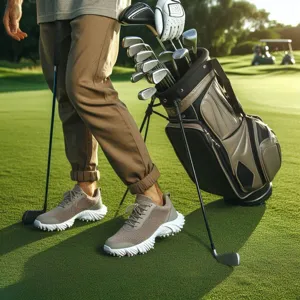
Your golf swing is essentially a kinetic chain starting at the ground. If your footwear choice is poor, your body compensates for instability, leading to power leaks. To maximize your performance, you must treat your golf shoes as a biomechanical tool rather than an aesthetic choice. A perfect fit directly impacts your ability to generate force and maintain balance during the rotational phases of your swing.
The Biomechanics of Your Foot Strike
Understanding your foot anatomy is the first step to choosing the right pair. When you swing, your feet act as anchors. During the backswing, weight shifts to the inside of your trailing foot and the outside of your lead foot. If your shoe lacks the structural integrity to support this lateral load, your center of pressure shifts prematurely.
- Neutral Pronation: Your foot rolls slightly inward to absorb shock. A shoe with moderate arch support and balanced cushioning is ideal.
- Overpronation (Flat Feet): Your arch collapses, causing the ankle to roll inward. This requires a shoe with a firm heel counter and medial posting to prevent the inward collapse of your kinetic chain.
- Supination (High Arches): Your feet do not roll inward enough, putting stress on the outer edge. You need maximum cushioning in the midsole to provide the shock absorption your natural architecture lacks.
Stability: The Foundation of Your Swing
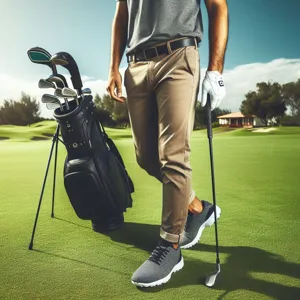
Think of your shoe as a foundation for a house. If the foundation is unstable, the structure above it will eventually crack. In golf, the ‘crack’ is your swing plane or balance point. A rigid heel cup is your best defense against energy loss. It keeps your calcaneus (heel bone) locked in place, preventing internal slippage when you exert torque during the downswing.
For players with high swing speeds, a spiked shoe is often superior. The spikes create a fixed pivot point, similar to a structural bolt in steel construction. This allows you to push harder into the ground without losing traction. If you have a lower swing speed or play on firm, dry courses, modern high-end spikeless shoes with rubber lug geometry provide sufficient ground connection while remaining comfortable.
Selecting the Right Platform for Your Anatomy
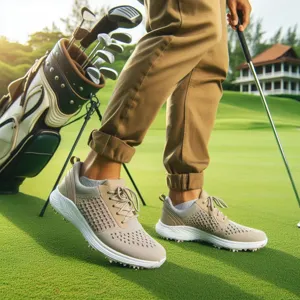
Choosing based on size alone is a mistake. You must prioritize volume and heel-to-toe drop. A heel-to-toe drop is the height difference between your heel and your forefoot; a higher drop can help shift your posture toward the balls of your feet, which is beneficial for players who tend to stay back on their heels during impact.
- For Stability Seekers: If you struggle with balance, look for a wide outsole base. This increases your surface area, lowering your center of gravity during the transition phase of your swing.
- For High Arch Comfort: Focus on midsole materials like EVA or TPU foams. These act like tiny shock absorbers, reducing the fatigue that usually kicks in around the 14th hole.
- For Narrow Feet: Avoid brands known for a ‘wide toe box’. You need a shoe with a structured upper that creates a vacuum-like fit, preventing your foot from sliding laterally when you rotate.
Field Experience: Common Errors and Adjustments
One major error is assuming your sneaker size is your golf shoe size. Golf shoes must have a stiffer construction, which doesn’t flex like a running shoe. Always size up by half a size to accommodate the swelling that occurs after walking six or seven kilometers. Your feet are at their largest in the late afternoon; this is the optimal time to try on new gear.
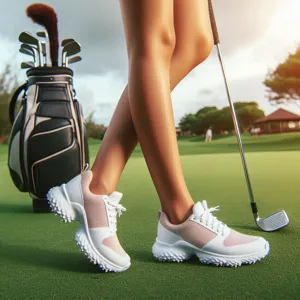
Credit : whatcanu.com Another common mistake is ignoring the lacing system. If you have a high instep, avoid ‘criss-cross’ lacing patterns that compress the top of your foot. Instead, use a ‘gap’ lacing technique to relieve pressure while maintaining lockdown. If you feel hotspots or blisters on the sides of your feet, your current shoe is likely too narrow. A blister is not a ‘break-in’ issue; it is a friction issue caused by improper volume.
Maintenance Protocols for Maximum Performance
The materials in your shoes—specifically the midsole foam—have a memory. Once they are compressed, they need time to recover. If you play twice or more per week, rotate between two pairs. This allows the cellular structure of the foam to decompress fully. Treat your shoes like precision equipment, not gym gear.
- Moisture Management: After a round, pull the insoles out. This allows air to circulate through the base of the shoe, preventing fungal growth and material rot.
- Cleaning: Never use industrial detergents on synthetic or leather uppers. Use a soft brush and water to clear the outsole; chemicals break down the bonding adhesives that keep the sole attached to the shoe.
- Storage: Avoid storing shoes in your trunk during summer. High temperatures can literally melt the adhesive bonds and cause the foam to lose its elasticity permanently.
Content updated on 2026-09-16
Related Posts: