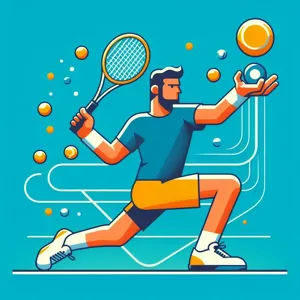
The serve is the only shot in tennis where you have total control. You are the architect of every point. Developing a high-impact serve is not about brute strength; it is about the efficient transfer of energy from your legs through your core to the racket. Think of your body like a coiled spring: the more tension you can create and release in a coordinated chain, the faster the ball will travel. Players who master this sequence often see an increase in serve speed by 15-20% within the first three months of focused training.
The Continental Grip: Your Essential Starting Point
If you want to unlock power and variety, you must use the Continental grip. Hold your racket as if you are shaking hands with it. Your index knuckle should sit on the second bevel of the handle. This grip feels awkward at first, but it is non-negotiable for high-level serving. It acts like a hinge, allowing your wrist to snap naturally at contact. Without this, you cannot achieve the racket head speed necessary for a professional-grade serve.
Perfecting the Toss: The Engine of Consistency
Credit : whatcanu.com
An inconsistent toss is the number one reason for a poor serve. Think of your toss as the runway for an airplane. If the runway is crooked, the plane will never land correctly. Practice standing at the baseline and tossing the ball without swinging. The ball should reach a height where you strike it at the very top of your extended reach. If you are forced to jump or reach uncomfortably, your toss is off. Data shows that professional players release the ball at eye level with a straight arm to ensure it stays in front of them.
Building the Kinetic Chain
Power originates from the ground, not your arm. When you prepare for your serve, bend your knees and shift your weight to your back leg. As you begin your upward motion, push off the ground and rotate your hips toward the target. Your arm should act only as a whip at the end of this motion. A common mistake is starting the swing before the legs drive upward. Focus on the legs driving first, followed by the torso rotation, and finally the arm snap.
Types of Serves for Tactical Advantage
You need to keep your opponent guessing by varying your placement and spin. Relying solely on flat, high-speed serves makes you predictable. Try mixing these three variations to maintain an advantage:
The Flat Serve: Best used for aces or setting up short balls. Aim to hit through the back of the ball.
The Slice Serve: Brush the side of the ball at 3 o’clock. This makes the ball curve away from the receiver, dragging them off the court.
The Kick Serve: Brush up the back of the ball from 7 to 1 o’clock. This generates high topspin, causing the ball to jump unexpectedly high upon landing.
Common Pitfalls and How to Fix Them
Credit : whatcanu.com
Even advanced players suffer from technical decay. Here are the most frequent errors and how to correct them immediately based on field observations.
The Chicken Wing Follow-Through: If your arm stops abruptly after contact, you lose power and risk shoulder injury. Ensure your racket finishes across your opposite hip. Imagine throwing a ball; your hand naturally crosses your body.
Rushing the Motion: If you feel hurried, your timing will be off. Use a pre-serve routine—like bouncing the ball three times—to reset your rhythm before every single point.
Forgetting the Eyes: Many players look at their target too early. Keep your eyes locked on the ball until you make contact to ensure clean impact.
Structuring Your Practice for Results
Do not just go to the court and hit balls aimlessly. Use a structured, metric-based approach to ensure every minute counts. Aim for a 60-minute session structured as follows:
10-minute warm-up: Hit 20 serves at 50% power to establish rhythm.
30-minute target drill: Hit 40 serves aiming specifically at the corners of the service box. Track how many land inside the lines.
20-minute pressure simulation: Play a mock tie-break where you must hit two consecutive serves to start the point.
Credit : whatcanu.com
If you perform this routine three times a week, you will likely see a 10-15% increase in your successful first-serve percentage within one month. Your serve is a skill that responds to deliberate, repetitive feedback.
Equipment Synergy
Ensure your racket is strung at a tension that supports your game. If you struggle to generate pace, try lowering your string tension by two or three pounds. This creates a trampoline effect, providing extra power without additional effort. If you are struggling with control, increase the tension slightly. Always consult a professional to ensure your racket frame is appropriate for your skill level. A frame that is too heavy often leads to fatigue, which degrades your form by the end of a long match.
Mental Discipline Under Pressure
The mental side of serving is often ignored. When you are down a break point, your heart rate increases and your muscles tighten. This is the moment to rely on your routine. Perform the exact same ritual every time you serve. This creates a psychological trigger that signals your brain to enter a state of focus. If you miss a first serve, do not panic. Simply breathe, adjust your feet, and trust the motion you have practiced thousands of times.