How can I improve my return of serve?

Improving your return of serve is not about reacting faster, but about anticipating sooner. Think of your return as a filter: you must absorb the server’s pace and channel it into a predictable arc toward your setter. If your reception is poor, your setter spends the point chasing bad balls instead of running an effective offense.
Mastering the Athletic Ready Stance
Most reception errors occur before the ball is even served because your stance is too static. If you stand upright, your muscles are cold and slow to fire. You need a setup that allows for an explosive first step.
- Lower your center of gravity: Keep your knees bent at a 45-degree angle. Your weight must stay on the balls of your feet, never your heels. Think of yourself as a coiled spring ready to release.
- Hand positioning: Keep your hands relaxed and in front of your core. If your hands are on your hips, you lose precious milliseconds moving them into position to form your platform.
- Wide base: Your feet should be slightly wider than shoulder-width. This provides the stability needed for lateral shifts without needing to reset your balance.
Refining Platform Mechanics
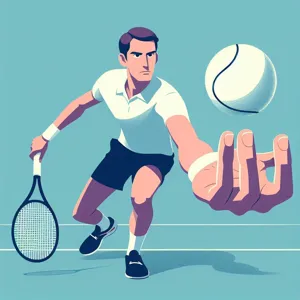
The biggest mistake players make is swinging their arms at the ball. A swing introduces variables that lead to unpredictable trajectories. You want a consistent, repeatable platform.
Think of your forearms as the headlights of a car. You steer the ball by angling the car itself, not by moving the headlights. Lock your elbows, drop your shoulders, and keep your platform still. Let the momentum of the serve do the work for you.
Advanced Footwork for Complex Situations

You must reach the point of contact before the ball arrives. If you are still moving when you make contact, your platform will wobble. Use short, rapid shuffles to move laterally. Never cross your feet, as this creates a moment of instability where you cannot change direction if the serve dips or veers.
Field experience tip: If you are forced to move forward on a short serve, take a long first step with your dominant foot followed by a quick shuffle. This keeps your chest facing the server, ensuring your platform stays squared to the setter.
Reading the Server’s Intent
Stop watching the ball the moment it leaves the server’s hand. Instead, watch the server’s body language. Most servers have subtle tells that reveal their target.
- The Toss: A deep, high toss often signals a float serve intended for the deep corners. A lower toss often leads to a hard, driven ball.
- Shoulder Alignment: Look at the server’s shoulders rather than their eyes. Their shoulders usually point directly to their target zone even if they turn their head to look elsewhere.
- Contact Point: If the server contacts the ball in front of their body, expect a faster trajectory. If they contact it behind their head, the ball will likely have a high arc and a late dip.
Drills to Simulate Game Pressure
Practice in isolation is rarely enough. You need to recreate the chaos of a match environment to build genuine resilience. These drills will bridge the gap between training and real play.
- The Variable Speed Drill: Have a partner serve from different locations at varying speeds. The goal is to identify the trajectory within the first half-second of the ball’s flight. If you cannot call out ‘short’ or ‘deep’ before the ball crosses the net, you are reacting too late.
- The Precision Zone Drill: Place a target (a hula hoop or a marked square) at the exact setter position. Aim for 7 out of 10 passes to land inside this target. If you touch the ball but it lands outside the target, treat it as a missed reception. This forces you to focus on quality, not just contact.
Mental Reset and Pre-Serve Rituals
Even the best players give up aces. The difference lies in how you handle the next serve. When you make an error, your adrenaline spikes and your focus narrows. Use a reset ritual to lower your heart rate. It could be as simple as adjusting your jersey or tightening your shoelaces. This physical action signals to your brain that the previous point is closed and you are now ready to execute the next task with a clear mind.
Content updated on 2026-09-26