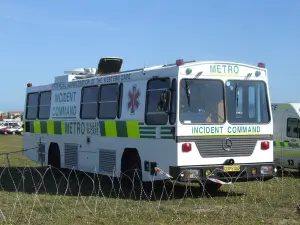
In the Incident Command System (ICS), the Incident Commander is the one position that is always staffed, on every incident, whatever its size. Every other position is activated only when the incident needs it. Until someone is assigned to those roles, the Incident Commander is responsible for all of their functions.
What ICS is
ICS is a standardized way to manage emergencies and planned events, used by fire departments, police, emergency medical services, public health, utilities and many private organizations in the US. It is part of the National Incident Management System (NIMS), described by FEMA. FEMA’s free online course IS-100, an introduction to ICS, is where many people first meet this question.
What the Incident Commander does
- sets objectives and priorities for the incident
- keeps overall responsibility for safety
- approves the incident action plan and resource requests
- decides which other positions to activate
- coordinates with agency leaders and, when needed, the public
On a small incident, such as a car fire, the first fire officer on scene may be the Incident Commander and handle everything personally. Command can transfer to a more experienced person as the incident grows, with a formal briefing.
How the structure expands
As complexity grows, the Incident Commander delegates. The Command Staff reports directly to the Incident Commander:
- Public Information Officer, who handles the media and public messages
- Safety Officer, who monitors hazards and can stop unsafe actions
- Liaison Officer, the contact point for other agencies
The General Staff leads the four main sections:
- Operations, which carries out the tactical work
- Planning, which tracks the situation, resources and the action plan
- Logistics, which provides supplies, facilities, food and communications
- Finance/Administration, which tracks costs, time and claims
In some incidents an Intelligence/Investigations function is added.
Span of control
ICS aims for each supervisor to manage between three and seven people or resources, with five considered ideal. When the number grows beyond that, new units, divisions or groups are created. This keeps communication manageable under stress.
Unified Command
When several agencies share responsibility, for example a chemical spill crossing city and county lines, a Unified Command lets their leaders set joint objectives while each keeps its own authority. There is still one set of objectives and one plan.
Emergency management is a career path for graduates in public safety and social sciences; see careers open to criminology graduates.