Decoding the Different Types of Neutron Stars
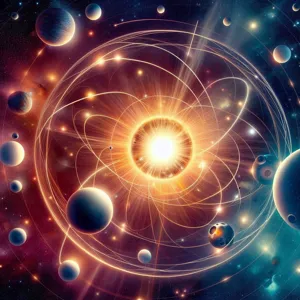
Neutron stars are the dense remains of massive stars that collapsed under their own gravity. Imagine compressing the entire mass of the Sun into a sphere the size of a city like London or New York. This results in a density so high that a single teaspoon of neutron star material would weigh about a billion tons. You are essentially looking at an atomic nucleus of cosmic proportions.
We classify these objects based on their rotation speed, magnetic intensity, and binary interactions. Think of these classifications like identifying different species of animals in a forest; they share a common origin but behave in vastly different ways depending on their unique environment and energy output.
Pulsars: The Universe’s Most Reliable Metronomes
Pulsars are neutron stars that spin rapidly and emit beams of electromagnetic radiation. If you visualize a lighthouse spinning in a dark sea, you understand how a pulsar works. The beam sweeps across space, and when it crosses Earth’s path, we detect a precise, rhythmic pulse.
- Extreme Precision: The Millisecond Pulsar J1748−2446ad rotates 716 times per second. It is a more accurate timekeeper than any atomic clock we have engineered on Earth.
- Practical Navigation: NASA is currently testing the Deep Space Atomic Clock, inspired by pulsars, to help navigate spacecraft using these cosmic signals as a GPS for the galaxy.
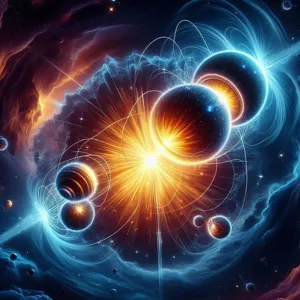
Common Error to Avoid: Do not mistake a pulsar for a star that flickers on and off. The star itself is constant; the pulsing is purely an observational effect caused by the rotation of the beam relative to our viewpoint.
Magnetars: The High-Energy Magnetic Monsters
Magnetars are a rare breed with magnetic fields a thousand times stronger than an average neutron star. To put this in perspective, if a magnetar were placed halfway between Earth and the Moon, it would wipe the data from every credit card and electronic device on our planet.
These stars undergo starquakes, where the crust fractures due to immense magnetic stress. This process releases massive bursts of gamma rays. In 2004, the magnetar SGR 1806-20 released more energy in one-tenth of a second than the Sun emits in 150,000 years.
Binary Systems and the Origin of Heavy Elements
When two neutron stars orbit each other, they lose energy through gravitational waves—ripples in the fabric of spacetime. Eventually, they collide in a kilonova event. This is not just a bright light; it is a nuclear forge.
Research published in Nature regarding the GW170817 event confirmed that these mergers are the primary source of heavy elements like gold, platinum, and uranium. Every time you see a gold ring, you are looking at the byproduct of a cosmic collision that occurred billions of years ago.
Central Compact Objects: The Quiet Enigmas
Central Compact Objects (CCOs) are neutron stars found inside the debris of supernova explosions that act differently than expected. Unlike pulsars, they do not show strong magnetic fields or bright radio emission. They are essentially quiet, hidden observers of the cosmos.
Field Experience Note: Astronomers often struggle to date these stars because they lack the standard markers we use for pulsars. Current studies suggest these stars might have been born with an unusually weak magnetic field, known as an ‘anti-magnetar’ configuration, which challenges our standard models of stellar evolution.
How We Observe the Unseeable
Because these stars do not shine like the Sun, we rely on indirect methods. We do not look for them; we listen to their signatures in non-visible light spectra.
- X-ray Telescopes: Instruments like the NICER observatory on the ISS measure the thermal heat of the surface to map the radius of the star with extreme precision.
- LIGO/Virgo Detectors: These laser interferometers measure changes in length smaller than a proton to detect the gravitational waves produced by binary mergers.
By studying the ‘Equation of State’—the relationship between the pressure and density inside these stars—we are trying to determine if the core consists of standard neutrons or a theoretical soup of deconfined quarks. Understanding this is the final frontier in verifying if our current physics models hold up under the most extreme pressure possible in the universe.
Content updated on 2026-09-04