Understanding Offensive Concepts in American Football
Credit : whatcanu.com
American football is a game of calculated risk and spatial control. An offensive coordinator doesn’t call plays randomly; they operate like a chess player, trying to force the defense into a specific shape. Recognizing these common offensive structures allows you to anticipate what happens next before the ball is even snapped.
Think of an offense as a team trying to open a door. You either try to kick it down with brute force or you pick the lock with precision. The most successful teams use a mix of both to keep the defense guessing.
The Inside Zone: Establishing Physicality
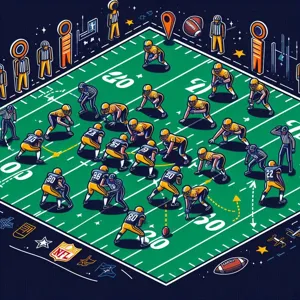
The Inside Zone is the foundational running play of the modern era. Instead of assigning a blocker to a specific defender, the offensive line blocks in a zone direction. They move as a unit, creating a wall that forces the defense to react.
The running back acts like a river flowing toward the ocean. He scans the line of scrimmage, waits for a gap to appear, and makes a single decisive cut. It is not about raw speed here; it is about patience and finding the seam created by the linemen.
Credit : whatcanu.com
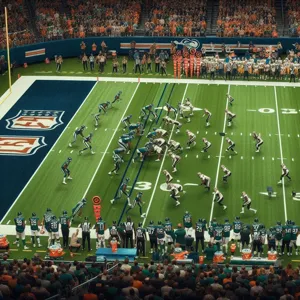
Field Reality: If you watch NFL film, notice how the offensive guards work together to push the defensive tackles. If the defensive tackle shifts left, the running back hits the right gap. This requires perfect timing between the blockers and the runner.
Common mistake: A running back who tries to bounce the play to the outside too early ruins the concept. By abandoning the interior, you lose the protection of your blockers and move straight into the path of faster edge defenders. Stay patient and trust the interior push.
The Outside Stretch: Exploiting Lateral Speed
When a defense is heavy and clogs the middle, the Outside Zone—or Stretch play—is the answer. This play forces the entire defensive front to run horizontally across the field. It is much harder for a 300-pound defensive tackle to change direction than it is for a running back to plant his foot and go.
Think of this play like trying to catch a person running past you. If you are standing still, they will beat you every time. The offensive line needs to reach the outside shoulder of the defender to seal the edge. If the blockers reach their target, the runner gets into open space where he can outrun the secondary.
The Play-Action Pass: Manipulating Linebackers
Play-action is essentially a psychological trick. You show the defense a running play to trigger a reaction from the linebackers. Because their primary job is to stop the run, their eyes naturally drop to the backfield when they see the handoff motion.
Credit : whatcanu.com
Once those linebackers step forward to defend the run, they vacate the area behind them. That empty space is the ‘window’ for the quarterback to throw a pass. It is like distracting a cat with a laser pointer while you take its treat.
Field Experience: Success here depends on the quarterback’s acting skills. If the fake handoff is clumsy, the linebackers won’t bite. You must sell the run completely to pull the defense toward the line of scrimmage before the tight end slips into the open zone.
The Screen Pass: Turning Aggression Into a Weakness
Aggressive defenses are often the easiest to manipulate. When a defensive line is obsessed with sacking the quarterback, they over-commit to the rush. The Screen pass uses that momentum against them.
The process is simple but requires precision:
The Lure: The quarterback drops back, signaling a standard passing play.
The Softening: The offensive linemen take a step back, letting the pass rushers sprint past them.
The Pivot: The blockers shift their focus and sprint out toward the sideline.
The Impact: The running back catches the ball behind the rushers, protected by a wall of blockers who are now leading the way.
The Read Option: The Quarterback as a Runner
Credit : whatcanu.com
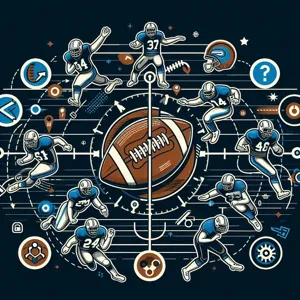
The Read Option turns the quarterback into a legitimate rushing threat. Instead of blocking the toughest defender, you ignore him entirely. The quarterback ‘reads’ this defender’s reaction to determine who carries the ball.
If the defender chases the running back, the quarterback keeps it. If the defender stays put, the ball is handed off. It is an effective way to play eleven-on-eleven, effectively neutralizing one defender without actually touching them.
Pro-tip: Focus on the defender’s hips, not his eyes. His head might be looking at the quarterback, but his hips will naturally shift toward the running back the moment he decides to commit. That is your cue to make the decision.
Situational Execution: The Red Zone
Inside the 20-yard line, the field shrinks. You have less space, which means you cannot rely on long-developing plays. The Slant route is the most common tool here. It is a quick, two-step cut that allows a receiver to beat man-to-man coverage.
Watch the defensive backs before the snap. If they are playing close to the line, they are protecting against the slant. If they are playing off, they expect you to throw elsewhere. Always adjust based on how the defense aligns, not on what you wrote on your clipboard before the game.