How do the different positions in American football contribute to a team’s success?

American football operates on the principle of synergy. Think of a team like a high-performance engine: every individual part has a specific tolerance and function. If one piston misfires, the entire system loses power, regardless of how fast the vehicle is. Understanding how these roles drive success requires looking at the technical demands of each unit on the field.
The Offensive Line: Building the Foundation
The five offensive linemen are the primary determinants of offensive efficiency. They establish the physical leverage required for every play to succeed. Without them, the quarterback cannot operate, and the running game never starts.
- Pad Level Mechanics: Offensive linemen compete using leverage. Think of it like a wrestling match: whoever gets their hands inside and keeps a lower center of gravity wins the battle. If your pads are higher than the defender’s, you are essentially providing them a handle to push you back.
- Pressure Rates: Data shows that teams holding an offensive pressure rate below 25% see quarterback efficiency rise by over 30 points. A clean pocket is the single greatest statistical indicator of a high-scoring drive.
- Common Mistake: Fans often blame the quarterback for sacks. In reality, protection breakdowns usually stem from a lack of communication or missed assignment by a guard or tackle before the snap even happens.
The Quarterback: The On-Field Tactical Processor
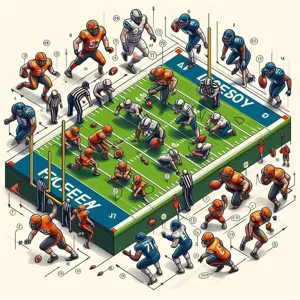
The quarterback acts as the team’s primary processor. They do not just throw the ball; they parse defensive signals in under three seconds. Success here is measured by their ability to diagnose and shift the play based on pre-snap reads.
- Pre-Snap Diagnostics: Before the ball moves, the quarterback is playing a game of chess. They look for how many defenders are near the line of scrimmage, which tells them if a blitz is incoming.
- The Metric that Matters: Ignore passing yards as a primary success metric. Instead, look at sack avoidance and decision-making under duress. A quarterback who realizes a blitz is coming and changes the play to a quick slant is far more valuable than one forcing a deep ball into double coverage.
Running Backs and Tight Ends: Tactical Versatility
In modern football, you cannot win with one-dimensional players. Running backs and tight ends act as the Swiss Army knives of the offense, allowing the team to dictate defensive personnel groupings.
- The Running Back Safety Valve: When the primary targets are covered downfield, the running back is the outlet. Providing a check-down option prevents the quarterback from taking a negative play or a sack.
- The Tight End Mismatch: These players are hybrids. They have the frame to block defensive ends but the speed to run routes against linebackers. By forcing a defense to decide whether to play a heavy linebacker or a lighter safety against them, you gain a massive structural advantage before the snap.
The Defense: The Physics of Disruption
Defensive success centers on forcing the offense into mistakes. Every position works to narrow the opponent’s field of choices, turning their high-percentage play into a low-percentage gamble.
- Defensive Line Integrity: Their job is to collapse the pocket and dictate timing. When the defensive line clogs internal gaps, they funnel runners toward the linebackers, effectively turning the field into a bottleneck.
- The Coverage-Pressure Ratio: This is a simple symbiotic rule: if your defensive backs cover well, the defensive line has more time to reach the quarterback. If the front line creates pressure, the defensive backs have a much easier job because the quarterback is forced to rush his throw.
- Field Experience Tip: Watch the linebackers. They are the eyes of the defense. A great linebacker identifies the formation and moves his teammates into position before the offense ever snaps the ball.
Special Teams: The Margin of Field Position
Special teams often dictate the probability of winning a game by establishing field position. Starting a drive at your own 40-yard line compared to the 20-yard line statistically doubles your chances of scoring on that possession.
- Directional Punting: A punter who can place the ball toward the sidelines limits the returner’s ability to gain yardage. This is essentially limiting the opponent’s room to operate, turning a neutral situation into a defensive advantage.
- Momentum Shifts: A single successful return can increase a team’s win probability by nearly 40%. This is not just about the points scored; it is about the sudden change in the opponent’s mental composure.
Assignment Football: The Secret to High-Level Execution
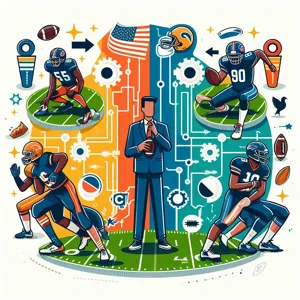
The biggest error teams make is relying on raw talent over discipline. High-level success is rooted in assignment football: every player does their specific job, regardless of whether they touch the ball.
Field Reality: If you watch a professional game, look at the wide receiver away from the ball. If that player is blocking for a teammate, a 10-yard gain turns into a 50-yard touchdown. If they quit on the play, the drive stalls. This is the difference between a championship roster and an average one. Success in football is the result of eleven individuals performing their specific roles in perfect sequence.
Content updated on 2026-09-28