Understanding Motorbike Braking Systems: Mechanics and Performance
Your motorcycle’s braking system is the single most important safety feature on your bike. While it is easy to view brakes as simple components that just stop the wheels, they are actually complex hydraulic or mechanical systems designed to convert kinetic energy into heat. If you understand how these systems interact with your tires and the road surface, you can ride with significantly more confidence and control.
The Primary Brake Types: Disc vs. Drum
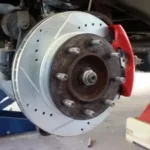
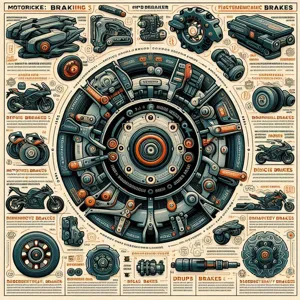
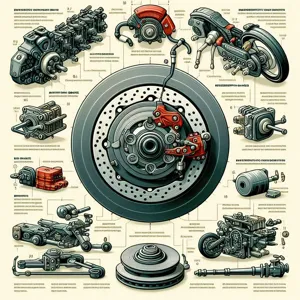
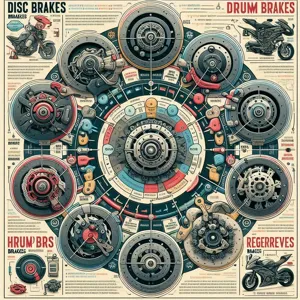
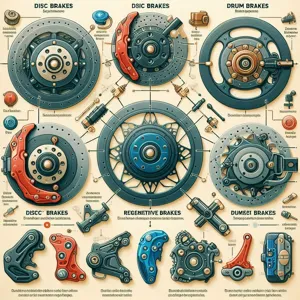
Most motorcycles use one of two main braking architectures: disc or drum. Think of a disc brake like a bicycle brake, but powered by high-pressure fluid. The disc spins with the wheel, and calipers squeeze pads against it. A drum brake is like a internal-expanding wedge: circular shoes inside a housing push outward against the drum to create friction.
- Disc Brakes: These are the industry standard for modern performance. They excel at heat dissipation, meaning they don’t lose effectiveness during heavy use (a phenomenon called brake fade).
- Drum Brakes: These are often found on vintage bikes or budget-friendly commuters. They are protected from elements like mud and rain inside their housing, but they struggle to shed heat, which limits their effectiveness during aggressive riding.
Advanced Braking Technology: ABS and CBS
Modern engineering has moved beyond basic friction to active safety systems. If you have ever felt your brake lever pulse during a hard stop, you have experienced an Anti-lock Braking System (ABS). ABS uses wheel-speed sensors to detect when a tire is about to skid; it then releases and reapplies brake pressure in milliseconds, much faster than a human could ever react.
Combined Braking Systems (CBS) take a different approach by physically or electronically linking the front and rear brakes. When you pull the front lever, the system automatically engages a portion of the rear brake. This provides a more balanced deceleration, which is particularly helpful for newer riders who may not yet have the muscle memory to balance both controls effectively during a panic stop.
The Critical Role of Brake Pads and Fluids
Your brakes are only as good as the material touching the rotor. Brake pads come in different compounds, each suited for a specific purpose. Organic pads are quiet and soft on rotors, making them great for casual street riding. Sintered pads, made of metallic particles, are designed for extreme temperatures and hard use. If you switch to sintered pads, ensure your rotors are compatible, as they are much more abrasive.
Never ignore your brake fluid. Brake fluid is hygroscopic, meaning it absorbs moisture from the air over time. Water has a much lower boiling point than brake fluid. If your fluid is old and contains water, the heat from a long descent can turn that water into steam, causing your brake lever to feel ‘spongy’ or go completely dead. Change your fluid according to your manual’s schedule—usually every two years.
Common Pitfalls and Field Experience
The most common mistake riders make is neglecting the ‘bedding-in’ process when installing new pads. If you slap on new pads and immediately perform an emergency stop, you can glaze the surface of the pad, creating a smooth, non-porous layer that reduces friction significantly. Always follow the manufacturer’s break-in procedure, which involves a series of gentle, controlled stops to transfer a thin layer of friction material onto the rotor.
Another classic error is ignoring the ‘feel’ of the lever. If you notice your bike requires more force than it did last month, do not assume it is just the pads wearing out. Air bubbles in the lines or a seized caliper piston are often the culprits. If you hear a grinding noise, stop riding immediately; you are likely metal-on-metal, which will destroy your rotors in minutes.
Proactive Maintenance Checklist
Keeping your braking system in top shape doesn’t require a professional mechanic for every step. Use this routine to keep your stops short and safe:
- Visual Inspection: Look at your pads monthly. If the friction material is thinner than a nickel, it is time for a change.
- Check Fluid Color: Fresh brake fluid should be clear or light yellow. If it looks dark or murky, it is contaminated and needs to be flushed.
- Rotor Health: Run your finger along the rotor when it is cool. If you feel deep grooves or ridges, you have uneven wear that will affect your stopping distance.
- Lever Consistency: If your lever travels closer to the handlebar than usual, check for leaks around the master cylinder or signs of air in the lines.
Final Verdict on Upgrades
Upgrading your brake lines from rubber to stainless steel braided lines is the most cost-effective performance mod you can perform. Rubber hoses expand slightly under high pressure, which is where that ‘mushy’ lever feel comes from. Stainless steel lines do not expand, meaning every ounce of pressure you apply at the lever is translated directly into clamping force at the caliper. It is a subtle change that yields a massive improvement in feedback and control.
Content updated on 2026-09-09