The Future of Motorbike Technology and Design: A Pragmatic Outlook
Credit : whatcanu.com
The motorcycle industry is shifting from mechanical purity toward a complex blend of software, material science, and electrification. You are not just buying a machine; you are investing in a mobile computing platform. Understanding these shifts helps you make better purchasing decisions and ensures your skills keep pace with your bike’s capabilities.
The Electric Drivetrain: Moving Beyond the Prototype Phase
Electric motorbikes are no longer experimental toys. They are becoming viable tools for daily commuting and even touring. Think of the move to electric as switching from a manual typewriter to a high-end laptop; the core function remains writing, but the speed, efficiency, and maintenance requirements change entirely.
Battery Energy Density: Newer NMC (Nickel Manganese Cobalt) chemistries now allow for greater range without adding bulk. Brands like Zero Motorcycles or Energica are hitting the 150-mile real-world range mark, which was unthinkable five years ago.
Regenerative Braking as a Tool: This is not just for efficiency. It acts like an engine brake that never wears out. By capturing kinetic energy, you reduce pad wear, saving you money on maintenance over 20,000 miles.
Fast-Charging Standards: Look for CCS (Combined Charging System) compatibility. Achieving an 80% charge in 40 minutes is the new benchmark for touring-capable electric bikes.
Material Science: Reducing Unsprung Weight
Credit : whatcanu.com
Weight reduction is the single most effective way to improve handling. Modern manufacturers are moving past steel frames toward carbon fiber and 3D-printed alloys. An analogy for this is the difference between wearing heavy leather boots and lightweight running shoes; the lighter your footgear, the more agile you are.
CFRP (Carbon Fiber Reinforced Polymers): Ducati and BMW are increasingly using these for subframes and swingarms. This reduces ‘unsprung weight’—the mass not supported by the suspension—allowing your wheels to track road imperfections faster.
Additive Manufacturing: 3D-printed titanium parts allow engineers to create hollow, complex geometries that are impossible to cast. This provides rigidity exactly where you need it, and flexibility where you don’t.
Intelligent Rider Assistance Systems (ARAS)
Automotive sensor suites are migrating to two wheels. These are not just gimmicks; they are systems designed to manage risk. Imagine a co-pilot who is constantly scanning for threats you might miss due to road fatigue.
Adaptive Cruise Control (ACC): Using front-mounted radar, bikes like the KTM 1290 Super Adventure S can maintain a set distance from the car ahead. This is a game-changer for long-distance highway travel.
6-Axis IMU Integration: The Inertial Measurement Unit is the ‘inner ear’ of the bike. It measures pitch, roll, and yaw. This data allows the ABS and traction control to function while you are leaned over at a 45-degree angle, something old-school systems could never do.
Blind Spot Detection: Using rear-facing radar, these systems alert you via mirror-integrated LEDs. This effectively eliminates the ‘head-check’ blind spot, which is a major contributor to lane-change accidents.
IoT Connectivity and Predictive Maintenance
Your dashboard is now an extension of your smartphone. However, the true value lies in predictive maintenance. Instead of guessing when your chain or brake pads will fail, the onboard diagnostic system analyzes your usage patterns. It predicts wear and sends a notification to your app when it is time for a service, preventing a breakdown before it occurs on the road.
Design Evolution: Modular and Functional
Credit : whatcanu.com
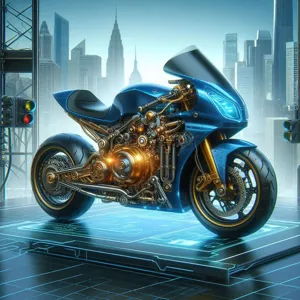
We are moving toward ‘exposed’ minimalist aesthetics. By reducing the number of complex plastic fairings, manufacturers decrease weight and lower the cost of repairs. If you drop a modern modular bike, replacing a single bolt-on frame slider is cheaper than replacing an entire custom-painted aerodynamic panel.
Common Pitfalls and Real-World Advice
A major error riders make is ‘technology complacency.’ Relying too heavily on traction control can lead to poor throttle discipline. Treat these systems as a final safety net, not as a replacement for correct body position or braking technique.
Credit : whatcanu.com
Return on Experience: Always test your bike’s electronics in a safe, empty parking lot. Trigger your ABS at low speeds. Lean the bike over safely to feel how the traction control intervenes when you apply power. Knowing exactly how the machine responds when the ‘nanny systems’ kick in is vital for when you eventually reach the limit of grip in real-world conditions.
The Future of Self-Stabilization
Full autonomy in motorcycling is limited by the physics of balance. However, semi-autonomous features like self-stabilization at low speeds are coming. This technology is essentially an active steering and gyroscopic assist that keeps the bike upright at walking speeds. It will likely open up the world of high-performance bikes to a larger demographic, making them less intimidating for shorter or less experienced riders.
Final Takeaway
Future motorbike technology is not about removing you from the equation. It is about removing the mechanical and safety friction that causes stress. By using these tools to your advantage, you can focus on the ride itself rather than managing the machine’s limitations.