What are the best ways to add character to your home?
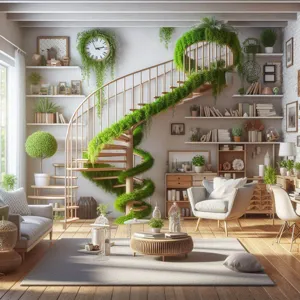
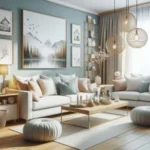
Most homes feel like sterile hotel rooms because they are curated from a single catalog page. When every item matches perfectly, the space loses its soul. Real character comes from friction: the contrast between a worn, inherited armchair and a sleek, modern floor lamp. Your home should act as a physical timeline of your experiences, not a showroom identical to your neighbor’s living room.
Break the matching furniture cycle
The most common mistake is buying matching furniture suites. When a sofa, loveseat, and coffee table come from the same collection, they create a visual vacuum that drains life from a room. Think of this like wearing a suit from a single brand versus styling a tailored jacket with vintage denim. The second option feels intentional and earned.
Use the 70/30 rule to balance your space. Dedicate 70% of your furniture to functional, neutral pieces, but reserve 30% for high-impact, distinct items. A scratched oak table from the 1960s carries history that particle board cannot replicate. These contrast pieces break the sterility of modern design.
Case Study: The living room transformation
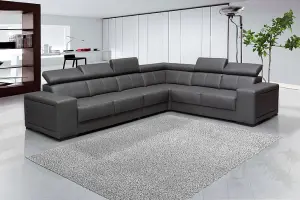
Consider a standard living room featuring a gray sectional and matching gray rug. To add character, replace the matching side tables with one sculptural stone pedestal and one vintage wooden stool. Add a rug with a bold, asymmetric pattern. Suddenly, the room stops being a gray box and starts being a collection of deliberate choices.
Architectural details: The silent anchors of a room
You do not need a historic house to have architectural character. Think of your walls as a blank canvas. If your room feels flat, it lacks definition. You can manufacture depth through small, strategic upgrades that change how light hits your surfaces.
- Upgrade hardware: Swap builder-grade cabinet pulls for solid brass or matte iron. It forces a tactile experience every time you open a door.
- Introduce millwork: Adding simple wall molding or beadboard to a boring hallway transforms the space instantly. It creates shadows that blank walls lack.
- Strategic paint: Paint a single interior door in a high-gloss finish or apply a saturated color to the inside of a closet.
The gallery wall as an evolving diary
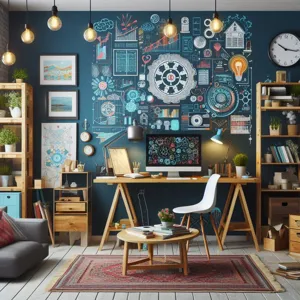
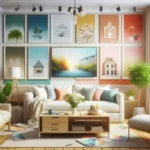
Gallery walls fail when they look like a bundle purchased from an online retailer. To add genuine character, your art must be a collection, not a decoration. Treat your walls like an archive rather than a frame shop.
Mix mediums to create visual rhythm. Combine large professional prints with small, framed concert tickets or sketches from your travels. Before picking up a hammer, lay everything on the floor. Arrange items so the eye moves naturally across the wall without getting stuck on one focal point.
Lighting: The mood architect
Lighting is the most overlooked design element. Most homes rely on a single, bright central light that flattens every texture. This is equivalent to taking a passport photo with a harsh flash. You must layer light sources to create depth.

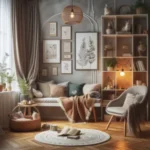
Apply the rule of three: an overhead light, a task light, and an ambient light. A low-hanging pendant over a coffee table changes the geometry of the room. Pair this with warm-toned bulbs (2700K). Warm light hides imperfections and makes textures like velvet or wool pop. Use floor lamps to illuminate dark corners, which visually expands the walls.
Field notes: Common pitfalls to avoid
Designing a home is a long-term project. Avoid these traps to keep your home from becoming a clutter trap or a stagnant showroom:
- The showroom trap: Do not buy everything at once. A home furnished in a single weekend lacks depth. Buy pieces slowly, as you travel or discover items that hold personal meaning.
- The scale disaster: Small items on massive walls create visual chaos. If you have a large wall, commit to one oversized piece of art or a large mirror. It grounds the room better than ten small frames.
- The fear of editing: If an object does not serve a purpose or provide a memory, it is inventory. Regularly prune your bookshelves. A home with character is a curated home, not a storage space for knick-knacks.
Why your choices matter
Adding character requires the courage to choose items others might find unusual. Your home is a living document. Do not be afraid to mix eras, materials, and textures. When you stop trying to make your house look like a catalog, you start making it look like a home. Focus on quality over quantity and let your environment evolve alongside your own experiences.
Content updated on 2026-10-12