How to create a cozy reading nook?
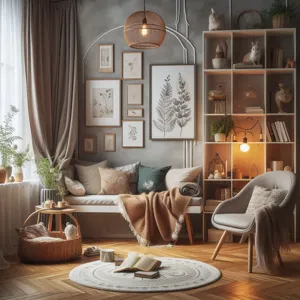
A reading nook is not just a chair in a corner; it is a dedicated psychological anchor. When you enter this specific space, your brain receives a signal that it is time to shift from productivity mode to deep focus or relaxation. If you are struggling to find time for books, a well-engineered nook solves the problem by removing the friction of ‘finding a place to sit’.
1. Selecting the right location for sustained focus
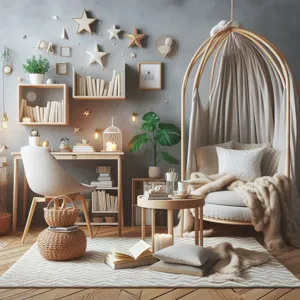
Do not simply choose the most empty wall in your house. A successful nook requires environmental control. Look for a space that minimizes ‘visual noise’—areas where you are not constantly facing your messy desk or an unwashed pile of laundry. If your home has a natural alcove, use it. If not, you can create one using a folding screen or a tall bookshelf to partition off a dedicated zone.
- Check the natural light: If you are a daytime reader, position your seat so sunlight hits the book from the side, not directly behind you (which creates glare) or in front (which causes eye fatigue).
- Monitor the acoustic profile: Avoid placing your nook directly against a wall shared with a loud appliance like a dishwasher or TV.
- Temperature matters: Ensure you are away from direct heating vents or drafty windows, as comfort is the prerequisite for long reading sessions.
2. Furniture: Engineering the perfect support system
The biggest mistake is prioritizing aesthetic design over ergonomic reality. You are not looking for a decorative piece; you are looking for a tool for long-duration sitting.
- The Chair Test: Look for a ‘depth’ that allows you to sit comfortably with your feet on the ground, or choose a seat wide enough to tuck your legs under you. If your chair is too deep, you will constantly shift and lose focus; use a lumbar pillow to fix this.
- The Side Surface: You need a surface at elbow height. If you have to reach down to the floor to grab your tea or glasses, you break your ‘flow state’.
- Versatility: If space is tight, use a leather ottoman instead of a stiff table. It serves as both a footrest and a stable surface for a tray containing your books and coffee.
3. Optimizing your lighting setup

Generic ceiling lights are the enemy of reading. They create shadows exactly where you need light. You need a layered lighting strategy to protect your eyesight and maintain a cozy atmosphere.
- The Task Light: Use a floor lamp with a swing arm. This allows you to bring the light source directly over your shoulder, directing it onto the pages rather than into your eyes.
- The Color Temperature: Always choose bulbs between 2700K and 3000K. Anything cooler (blue-toned) will make your space feel like an office, killing the relaxation effect.
- The Ambient Softener: Add a low-intensity light, like a dim salt lamp or a small string light, to fill the rest of the room. This prevents the harsh contrast between your book and the dark room, which leads to eye strain.
4. Textiles: The sensory transition
Textiles are the tools you use to physically ‘close’ your nook. A heavy wool throw or a velvet cushion does more than look good; it provides a tactile sensation that signals to your nervous system that you are safe and supported.
- Layering Strategy: Do not use just one blanket. Use a thin one for temperature control and a heavy, weighted throw for a sense of containment.
- Rug Zoning: Use a small rug to define the ‘territory’ of your nook. When your feet hit the specific texture of the rug, it reinforces the routine of being in your reading space.
5. The professional organizer’s guide to shelving

A messy bookshelf creates subconscious anxiety. To keep your nook serene, organize your books to facilitate discovery rather than just storage.
- The 70/30 Rule: Use only 70% of your shelf space for books. Leave 30% for empty space or personal objects. This prevents the shelf from looking like a cluttered warehouse.
- Verticality: Mix horizontal stacks with vertical rows. This breaks up the monotonous line of book spines and allows you to display objects on top of the flat-lying books.
- The ‘Currently Reading’ Bin: Keep a dedicated basket or a single dedicated shelf at eye level for your ‘to-be-read’ stack. Seeing the books you want to read next acts as a visual prompt, keeping your habit consistent.
6. Maintenance and routine: Preventing the ‘clutter trap’
The biggest failure point for reading nooks is that they become ‘drop zones’ for clothes or mail. Treat your nook with the same respect as a dedicated office.
- The 2-Minute Reset: Never leave the nook without resetting it. Close your book, straighten the cushion, and move your mug to the kitchen. If the nook is ‘reset’ when you arrive, you are 50% more likely to start reading immediately.
- Seasonal Rotation: Keep your nook dynamic. Change your throw blanket in spring for something lighter, or swap your reading lamp for a warmer glow in winter. This keeps the space feeling ‘fresh’ to your brain, maintaining the novelty of the experience.
7. Error analysis: Common mistakes to avoid
- The ‘Coffee Table’ Pitfall: Never use a glass-top table as your primary surface. It is prone to fingerprints and creates distracting reflections from your lamp. Use wood or matte metal.
- The Over-Decoration Trap: Do not put too many knick-knacks on your side table. You need space to actually lay a book down flat. If you have to move things to open a book, you will eventually stop using the space.
- Ignoring Back Support: If you use a beanbag, make sure it has structural integrity. If you are sinking into a ‘U’ shape, your neck and back will hurt within 20 minutes, cutting your reading session short.
Content updated on 2026-10-12