The best car seat is the one that fits your child, fits your car and is installed correctly every time. Price and brand matter much less than those three things. The guidance below follows US recommendations; other countries use similar principles under different standards.
The stages
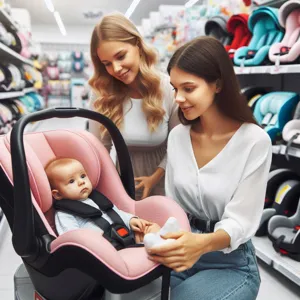
Rear-facing seats are for babies and toddlers. Keep your child rear-facing as long as possible, until they reach the maximum height or weight allowed by the seat. The American Academy of Pediatrics and NHTSA both recommend this, because a rear-facing seat spreads crash forces across the back and protects the head and neck. Infant seats click into a base and can be carried; convertible seats stay in the car and can later be turned forward.
Forward-facing seats with a harness come next, used until the child outgrows the harness limits.
Booster seats raise the child so the adult seat belt fits properly: the lap belt across the upper thighs, not the stomach, and the shoulder belt across the middle of the chest and shoulder, not the neck. Many children need a booster until they are about 4 feet 9 inches tall, often between 8 and 12 years old.
Children under 13 should ride in the back seat. Never put a rear-facing seat in front of an active airbag.
Check the fit with your car
Not every seat fits every car well. Before buying, check whether the seat can be installed with the LATCH system (lower anchors and top tether) or the seat belt, and whether it fits the angle of your seats. If you need three seats side by side, measure carefully; narrow seats exist for that purpose. The IIHS rates how easy LATCH hardware is to use in many models.
Install it correctly
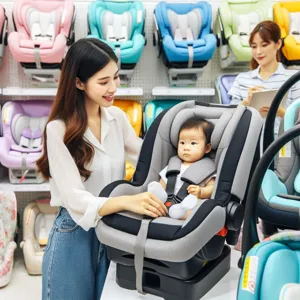
Most car seats are installed with some error, and many of those mistakes reduce protection. Read both the seat’s manual and your car’s manual. A properly installed seat moves less than one inch side to side at the belt path. Harness straps should be snug: you should not be able to pinch a fold of strap at the shoulder.
Free help is available. In the US, certified child passenger safety technicians check installations at inspection stations; you can find one through NHTSA’s car seat page, which also has a tool to find the right seat by age and size.
Other tips
- Register the seat with the manufacturer so you hear about recalls.
- Avoid second-hand seats unless you know their full history: replace a seat after a moderate or severe crash, and respect its expiry date.
- Remove bulky winter coats before buckling; they leave the harness too loose.
For the car itself, see how to check car safety ratings and the best cars for families.