
Understand the Psychology of the Youth Athlete
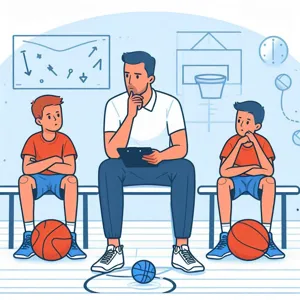
Coaching kids is not about executing high-level tactical sets. It is about understanding the cognitive and emotional limitations of a developing brain. Youth athletes process information differently than adults. They struggle with multi-tasking and abstract spatial awareness. Your role is to simplify the complex reality of basketball into digestible, bite-sized actions.
Think of their brain like a computer with a small RAM capacity. If you provide too many instructions, the system freezes. Give them one specific cue per possession. Focus on one skill until it becomes second nature before layering on new information.
The Psychology of Error and Motivation

Fear of failure is the number one inhibitor for young players. If a player is afraid to miss a shot, they will stop shooting entirely. You must create a psychological safety net. Normalize the mistake as a data point, not a judgment of character.
- The Growth Mindset Pivot: Instead of saying you are proud of their performance, praise their effort in practice. Say, I like how you focused on your footwork today. This reinforces the process over the outcome.
- Managing Frustration: Young athletes often lack emotional regulation. When a player reacts poorly to a bad call or a missed shot, do not escalate. Use a calm, low-energy voice. Your composure acts as an anchor for their scattered emotions.
- The 60/40 Skill-to-Scrimmage Ratio: Keep the 60/40 rule to maintain interest. Spend 60% of time on fundamentals to build their toolset, and 40% on scrimmages to keep the engagement high. Without the game element, youth players lose interest quickly.
Effective Communication Strategies
Avoid jargon that sounds professional but means nothing to a ten-year-old. Use analogies that relate to their daily lives to illustrate court dynamics.
- The Bubble Concept: Tell players to imagine they are in a bubble. If two bubbles touch, the bubble pops. This is a simple, visual way to teach floor spacing without technical talk.
- The Follow-the-Leader Drill: When teaching defensive movement, use the nose-to-chest cue. It is easier for a child to track a chest than to understand complex hip-turning mechanics.
- The Pause-and-Play Technique: When a tactical error occurs, stop the drill immediately. Have them reset the play in the exact same spot. This provides instant feedback loops that solidify learning.
Navigating Team Dynamics and Parental Expectations

A youth team is essentially a micro-society. You must manage the hierarchy carefully to prevent cliques or bullying. Keep the rotation fair and transparent from day one. If players know they will play, they focus on their development instead of worrying about bench time.
Parental friction usually stems from a lack of clarity. Send a document before the season starts outlining your philosophy. State clearly that the priority is long-term skill acquisition, not the trophy count. When parents understand the ‘why’ behind your methods, they become partners rather than adversaries.
Field Experience: Common Traps to Avoid

The biggest mistake is ‘sideline coaching.’ Do not joystick your players from the bench. If you tell them every move to make, they never learn to read the game themselves. Let them make mistakes during the game and address those mistakes during practice.
- Focus on the Bottom: Give your most attention to the least skilled players. Your best players often have outside support or more experience. Your coaching talent is best measured by how much the least capable player improves.
- Structure is King: Kids thrive on predictability. Use a set routine for every practice. Warm-ups, skill stations, team tactics, and scrimmages should follow the same order. This reduces transition time and keeps energy high.
- Emotional Detachment: Never debrief immediately after a tough loss. Emotions are elevated, and the ability to learn is minimized. Wait 24 hours. A cooler head allows for objective analysis of the game film or specific plays.
Building Long-Term Athletic Confidence
Ultimately, your success as a coach is not the win-loss record. It is whether the players return for the next season. Focus on building a culture where effort is the primary currency. When you criticize, be specific about the action, not the person. Say, that pass was behind your teammate, not you are clumsy. This keeps the athlete’s self-esteem intact while correcting the technical error. By focusing on the journey, you develop athletes who enjoy the game and have the confidence to improve throughout their lives.
Content updated on 2026-09-13