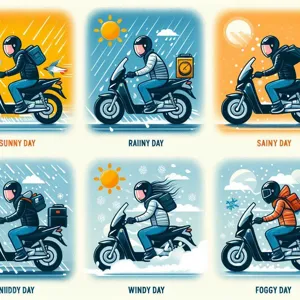
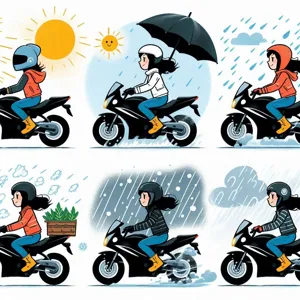
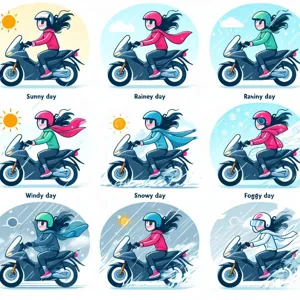
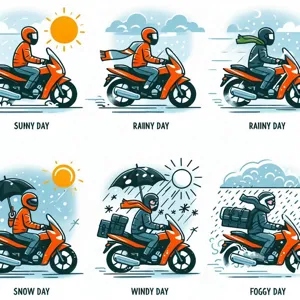
Riding a motorcycle exposes you to environmental variables that a car driver simply never experiences. Rain, wind, and temperature shifts aren’t just inconveniences; they fundamentally change how your machine interacts with the tarmac. To ride safely in diverse conditions, you must move beyond passive observation and adopt a proactive, technical approach to bike handling.
The Physics of Traction: Managing Wet Surfaces
Water on the road acts like a lubricant between your rubber and the asphalt. When it first starts to rain, oil and road grime float to the surface, creating a slick film that is significantly more dangerous than a heavy downpour. Think of your tires as a drainage system: their primary job is to channel water away from the contact patch. If your tread depth is low, that water has nowhere to go, leading to hydroplaning—where the tire loses contact with the road entirely.
Smooth Inputs: In the wet, avoid jerky throttle or brake movements. Treat your controls like delicate switches rather than levers.
Braking Strategy: Increase your following distance by at least double. Start your braking sequence earlier and use the rear brake more progressively to balance the chassis.
Line Selection: Avoid the center of the lane, which acts as a collection trough for oil and debris leaked by cars.
Handling Crosswinds: Your Body as a Stabilizer
Credit : whatcanu.com
Gusty winds can push a motorcycle off its intended line in a split second. Fighting the wind with rigid tension in your arms is a classic mistake. If you grip the bars too tightly, you transfer the wind’s instability directly into the steering geometry. Instead, keep your arms loose and use your core strength to grip the tank with your knees.
When a gust hits, lean your upper body slightly into the wind. Think of this like a sailboat tacking against the breeze; by shifting your center of gravity, you counteract the lateral force pushing the bike. If you are crossing a bridge or moving past a large truck, expect a sudden drop in wind resistance. Be ready to ease off your counter-steer to prevent swerving into the next lane.
Thermal Management and Rider Fatigue
Credit : whatcanu.com
Extreme temperatures are more than just a discomfort; they are a safety hazard. When you are too cold, your fine motor skills deteriorate, and your reaction times slow down. Conversely, heat leads to rapid dehydration and ‘heat fog,’ where your decision-making becomes sluggish.
The Layering Principle: Use a three-layer system. A moisture-wicking base layer, an insulating mid-layer (fleece or down), and a windproof/waterproof outer shell. This traps air, which is the best insulator.
Hydration Logistics: Don’t wait until you are thirsty to drink. Use a hydration bladder with a tube integrated into your helmet or chest protector to sip water continuously.
Cold Start Inspection: In freezing temperatures, tire pressure drops significantly. Check your pressures weekly, as underinflated tires will not reach their optimal operating temperature, leading to poor grip.
Common Mistakes to Avoid
The most frequent error riders make is failing to adapt their pace to the current conditions. Just because the speed limit is 60 mph does not mean it is safe to ride at that speed in heavy fog or standing water. Another common pitfall is the ‘target fixation’ phenomenon during adverse weather. If you see a patch of ice or a deep pothole, your brain tends to guide the bike exactly where you are looking. Force your eyes to look at the clear path you want to take, not the obstacle you want to avoid.
Maintenance for Harsh Environments
Credit : whatcanu.com
If you ride through winter, salt is your bike’s greatest enemy. Salt acts as an electrolyte, accelerating corrosion on aluminum and steel components at an alarming rate. After every ride in salty or wet conditions, rinse the bike with cool (not hot) water. Applying a silicone-based spray to non-braking metal surfaces creates a sacrificial barrier against moisture. Regularly lubricate your chain, as grit and water will strip away factory grease in a matter of miles, leading to premature link failure.
When to Call it Quarts
There is a fine line between a challenging adventure and an unnecessary risk. If standing water is deeper than your axle, or if black ice is present, the physics of a two-wheeled vehicle simply won’t support safe travel. Professional riders know that the ultimate skill is knowing when to park the bike and wait for conditions to improve. Prioritizing your survival over reaching your destination on time is the hallmark of a true expert.