A 90-degree screwdriver, also called a right-angle screwdriver, lets you drive or remove screws where a straight screwdriver will not fit: inside cabinets, behind appliances, between joists or inside a computer case. The bit sits at a right angle to the handle, so you turn it from the side.
The main types
Manual offset screwdrivers. The simplest version is a Z-shaped or L-shaped steel bar with a tip at each end, often Phillips on one side and flat on the other. You turn it a quarter turn at a time, flip it, and continue. Cheap and slim, but slow.
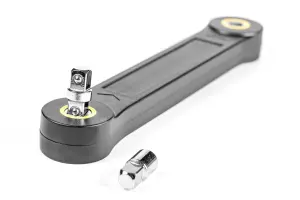
Ratcheting right-angle screwdrivers. A compact head holds standard 1/4-inch hex bits, and a ratchet lets you turn back and forth without lifting the tool. A good all-round choice for household repairs.
Right-angle drill attachments. A gearbox that clips onto a drill or impact driver turns the motor’s rotation 90 degrees. Ideal for many screws in a tight space, such as installing cabinet hardware or working inside furniture. Use a low speed and a light trigger to avoid stripping screws.
Dedicated right-angle drills. Cordless tools built for electricians and plumbers who drill between studs. More power, more money.
Where it saves the day
- tightening hinges and drawer slides inside cabinets
- removing panels behind a washing machine or dishwasher
- repairs in a car’s engine bay or under the dashboard
- assembling furniture with screws near a wall or corner
- mounting things under a desk or shelf
Features worth checking
- a short head height, which decides whether it fits in the tightest gaps
- a magnetic bit holder, so screws do not fall into the cavity
- standard hex bits rather than proprietary ones
- a comfortable handle for grip and torque
- for attachments, a metal gearbox and a side handle to steady the drill
Tips for tight spaces
Put a dab of putty or use a magnetic bit so the screw stays on the tip. Press firmly into the screw head while turning; most stripped screws come from too little pressure, not too much force. Start screws by hand before using a powered attachment. Wear eye protection when working overhead.
A flexible shaft extension is the alternative when the angle is awkward rather than a strict right angle. Both are inexpensive and earn their place in a toolbox. If you are just building one, our list of the best tools for a beginner DIYer covers the essentials, and simple jobs like installing a carriage bolt show how the right tool makes the work easier.