What is a Carriage Bolt?
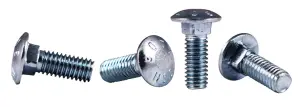
A carriage bolt is a specialized fastener designed primarily for wood-to-wood or wood-to-metal connections. Unlike a hex bolt that requires a wrench on both ends to operate, a carriage bolt is designed for one-sided tightening. It features a domed, smooth head and a square neck directly underneath. This design makes it the gold standard for deck building, fence construction, and heavy-duty furniture assembly.
Think of the square neck as a manual locking key. Once you tap the bolt into a hole, the square shank sinks into the wood, effectively locking the bolt in place. This allows you to tighten the nut from the opposite side without the bolt spinning in its hole. It is a brilliant bit of mechanical engineering that simplifies construction for solo builders.
Anatomy and Technical Specifications
Understanding how the components interact is the difference between a rock-solid build and a loose connection. These are the three parts you need to manage:
- The Mushroom Head: The smooth, rounded top provides a finished, tamper-resistant look. Because it lacks a drive head (like a Phillips or Torx), it cannot be easily removed from the outside once the nut is secured.
- The Square Neck: This is the functional heart of the bolt. As you tighten the nut, the square neck bites into the wood fibers, acting as an anchor.
- The Threaded Shank: This provides the grip for the nut. Always check your thread pitch to ensure it matches your nuts—standard coarse threads are the industry norm for most wood projects.
Field Guide: Choosing the Right Material
Do not let hardware store aisles overwhelm you. Your choice of material determines the lifespan of your project. Using the wrong metal is a classic amateur mistake that leads to structural failure within two seasons.
- Hot-Dip Galvanized: This is your go-to for outdoor wood framing. The thick, matte-grey zinc coating creates a chemical barrier against rain and moisture.
- Stainless Steel (Grade 304 or 316): Choose these for coastal environments. Salt air eats through standard steel in weeks. If you are within 5 miles of the ocean, 316-grade stainless is a non-negotiable requirement.
- Zinc-Plated: Reserve these strictly for indoor use. They offer zero rust protection and will corrode immediately if exposed to the elements.
Mastering the Installation Process
Poor installation is the primary cause of wobbly structures. Follow this workflow to ensure your joints remain tight for years.
- Precision Drilling: Your drill bit must be the exact diameter of the bolt shank. If the hole is too wide, the square neck will spin in the wood instead of biting into it. If it is too tight, you will split the timber as you drive the bolt.
- The Seating Technique: Use a mallet to tap the head flush against the surface. Never strike the threaded end, as you will mushroom the steel and make it impossible to get a nut on later.
- Load Distribution: Always place a heavy-duty flat washer between the nut and the wood surface. Without a washer, the nut will chew into the wood as you tighten it, eventually losing its grip.
- Torque Control: Wood is a dynamic material. Over-tightening crushes the fibers under the washer, leading to a loose joint once the wood dries out. Tighten until the washer is snug, but stop before you deform the surrounding wood.
Common Pitfalls and Pro-Tips
Even seasoned pros deal with the frustration of a spinning carriage bolt. If you find the bolt rotating during tightening, the hole is likely stripped. You can attempt to hold the head in place with a heavy-duty clamp or a pair of locking pliers, but it is better to prevent this by ensuring the square neck seats fully before applying pressure to the nut.
Another frequent mistake is using carriage bolts in metal-to-metal applications without square-punched holes. A circular metal hole provides no grip for the square neck. In such cases, the bolt is useless. If you must use them on steel, you will need a square-hole punch tool to create the correct seat.
Maintenance and Long-Term Reliability
Wood is a living material that shrinks and expands with seasonal humidity. Every spring, take fifteen minutes to check your key connections. If you see a gap between the bolt head and the timber, the wood has likely shrunk. A quick turn of the wrench to re-seat the nut will keep the structure rigid. If you notice rust streaks bleeding from the bolt head, the protective coating has failed. Inspect the bolt for diameter loss due to corrosion; if the shank looks thinner than the original, it is time to replace it to maintain structural integrity.
Content updated on 2026-09-03