What are the ethical considerations when riding a motorbike?
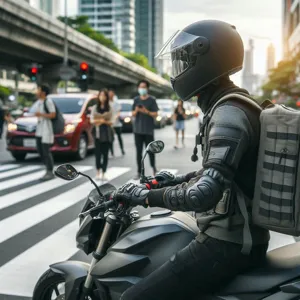
Riding a motorcycle is often perceived as an act of personal freedom. However, your presence on the road creates a ripple effect that impacts other drivers, pedestrians, and the future of the motorcycling community. Ethical riding is not about adhering to abstract moral codes; it is a practical framework for risk management and social responsibility.
The Pragmatics of Defensive Awareness
Ethical riding begins with the assumption that you are invisible. In urban settings, where nearly 40% of motorcycle accidents occur at intersections, reliance on others to see you is a strategic error. Think of defensive awareness as a 360-degree security bubble you carry with you.
- The Buffer Zone Strategy: Always maintain at least a two-second gap between you and the vehicle in front. In wet conditions, increase this to four seconds. This provides the necessary reaction time to avoid road debris or sudden braking.
- The Escape Path: Never stop directly behind a vehicle. Stop offset to the left or right, ensuring you have a clear path to accelerate away if the car behind you fails to stop.
- Predictability is Safety: Signal your intent 50 meters before making a turn. Jerky, last-minute maneuvers force other drivers to make emergency decisions, which increases the likelihood of a collision.
The Social Contract of Noise and Presence
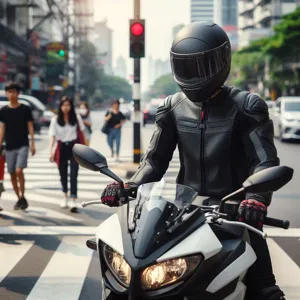
Unnecessary noise is a common reason for public backlash and restrictive anti-motorcycle legislation. Ethical riding involves managing your mechanical footprint to ensure the hobby remains accessible.
- Throttle Discipline: Avoid high RPMs in residential zones or during early morning hours. Excessive noise serves no performance purpose in city traffic.
- The Community Impact: Every time you blip your throttle aggressively near a public space, you contribute to a negative stereotype. By riding quietly, you preserve your right to access those same roads in the future without local councils banning bikes due to noise complaints.
Professional Gear Standards and Risk Mitigation
Choosing your gear is a functional task, not a stylistic one. An ethical rider acknowledges the burden their accidents place on emergency responders. Wearing protective gear is your professional duty to mitigate that potential strain.
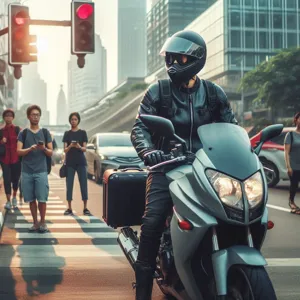
Error to avoid: Many riders rely on casual streetwear or leather vests that lack impact protection. Statistics show that denim and standard cotton offer near-zero abrasion resistance during a slide. Always verify that your jacket, pants, and gloves carry CE-level ratings.
- The Crumple Zone Concept: Since your bike lacks a steel frame to protect you, your gear is your only buffer. Invest in gear with integrated armor for your back, shoulders, elbows, and knees.
- Visibility Matters: Incorporating high-visibility panels or reflective materials into your gear is an ethical choice. It reduces the cognitive load on other drivers by making you easier to spot in low-light conditions.
Environmental Stewardship and Mechanical Integrity
Your bike’s mechanical state directly reflects your respect for the environment and the machine itself. Poor maintenance causes fuel waste and harmful emissions. A well-tuned motorcycle is an efficient tool for urban mobility.
- Tire Pressure Optimization: Check your tire pressure weekly using a manual gauge. Under-inflated tires increase rolling resistance, forcing your engine to work harder and increasing fuel consumption by up to 5%.
- Chain and Lubrication: A neglected chain creates friction, wasting horsepower and accelerating wear on sprockets. Cleaning and lubing your chain every 500 to 800 kilometers is a basic maintenance duty.
Mentorship and the Culture of Mutual Aid
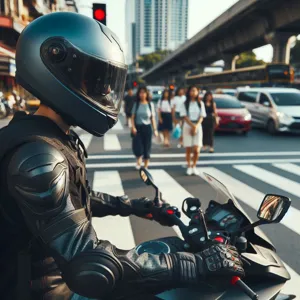
The motorcycle community survives on a legacy of mutual support. If you see another rider on the side of the road, stopping to offer help is the gold standard of ethical conduct. Beyond roadside assistance, mentorship is critical for lowering accident rates among newer riders.
Returning the Favor: If you are an experienced rider, share your knowledge of ‘target fixation.’ Explain that when a rider stares at an object they want to avoid, they unconsciously steer directly into it. Teaching beginners to scan the horizon or the path they want to take—not the hazard they fear—is the most effective way to save lives.
Professionalism in Urban Conflict
Cities are the primary testing ground for your ethics. When traffic is gridlocked, your behavior determines how the public perceives motorcyclists. Aggressive filtering or revving your engine in traffic congestion creates hostility. By acting as a calm, predictable, and courteous road user, you advocate for the legitimacy of motorcycles as a valid transport solution rather than a nuisance.
Content updated on 2026-09-09