Understanding Patio Covers: Structural Options and Material Performance
Credit : whatcanu.com
Choosing the right patio cover involves more than picking a style that looks good. You are selecting an infrastructure component that must withstand wind loads, UV degradation, and moisture cycles. Whether you are aiming to increase the square footage of your usable living area or protecting high-end outdoor furniture, the structural choice you make will dictate the long-term maintenance requirements.
1. Aluminum Patio Covers: The Industrial Standard
Aluminum is the most common material choice due to its balance of strength-to-weight ratio and resilience. It is essentially immune to rot, termite infestation, and warping, which are the primary failure points of organic materials. Professional tip: Ensure the aluminum is powder-coated rather than spray-painted. Powder coating is an electrostatic process that bonds the finish to the metal, creating a surface far more resistant to chipping and corrosion.
Durability: Expect 20 to 30 years of lifespan with minimal upkeep.
Thermal behavior: Aluminum conducts heat. If you live in a high-temperature zone, consider insulated aluminum panels which feature a foam core to prevent heat transfer.
Maintenance: Periodic pressure washing (at low pressure) is sufficient.
2. Pergolas: Aesthetic Structures with Functional Limitations
Credit : whatcanu.com
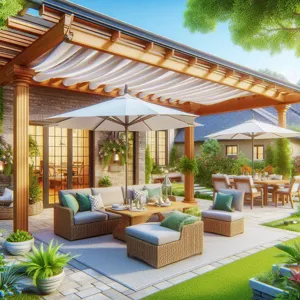
A pergola is a grid-like structure of vertical posts and overhead beams. While visually striking, it is important to distinguish between a decorative pergola and one designed for shelter. If you want true protection from rain, a standard open-slat pergola will fail. To add functionality, you must incorporate retractable fabric canopies or translucent polycarbonate roofing sheets between the slats.
3. Louvered Roof Systems: Precision Climate Control
Louvered roofs are essentially mechanical shutters for your patio. Using a manual crank or a motorized actuator, you can rotate the slats to block the sun, allow air flow, or seal the roof completely against rainfall. Technical warning: The success of a louvered system depends entirely on the quality of the internal guttering system. Verify that the unit you choose has high-capacity internal drainage channels to prevent water overflow during heavy storms.
4. Solid Roof Structures: Total Environmental Sealing
Solid roof covers are distinct from shade structures because they provide a complete barrier against atmospheric moisture. Whether built with composite shingles, standing-seam metal, or polycarbonate, these structures require a calculated slope to ensure effective water runoff. An error in pitch—often caused by DIYers trying to keep the roof too flat—will lead to pooling water, which inevitably causes leaks at the fascia joints.
5. Shade Sails: Structural Tension Engineering
Credit : whatcanu.com
Shade sails rely on tension rather than rigid support. They are excellent for budget-conscious projects but require heavy-duty mounting hardware. You must secure these to structural elements, not decorative siding. If a sail is not properly tensioned, it will vibrate in the wind, which eventually fatigues the grommets and tears the fabric.
Critical Selection Criteria: Material Engineering
When evaluating these options, use this comparative guide to ensure your investment lasts:
Timber (Cedar/Teak): Requires annual sealing or staining. Excellent for aesthetic value but high-labor commitment.
Vinyl (PVC): High UV resistance but prone to becoming brittle in extremely cold climates. Avoid if your area experiences sub-zero winters.
Composite Materials: The best of both worlds, offering wood-like textures with the rot-resistance of plastics.
Common Installation Pitfalls and ROI
Credit : whatcanu.com
Do not underestimate the importance of the foundation. Many homeowners anchor posts directly onto concrete pavers. This is a mistake. Posts should be anchored into a reinforced concrete footer (at least 12-18 inches deep) to prevent the structure from shifting during high winds. Regarding property value, a permanent, permitted structure that seamlessly matches the roofline of your home provides a significantly higher return on investment than a temporary, bolt-on awning or tent structure.
Operational Maintenance Checklist
Regardless of the type you choose, keep these maintenance tasks on your calendar:
Bi-annual hardware check: Tighten all bolts and lag screws, as thermal expansion and contraction will loosen connections over time.
Drainage clearing: Ensure your gutters or weep holes are clear of debris. Clogged drainage is the #1 cause of water damage in patio covers.
Fabric care: If using retractable fabric components, ensure they are fully dry before retracting them to prevent the growth of mildew and mold in the storage casing.
Choosing between these systems depends on your local climate and how you intend to utilize the space. Prioritize solid roofs if you require year-round protection, or consider louvered systems if you want the ability to switch between an open-air environment and a sheltered room at will.