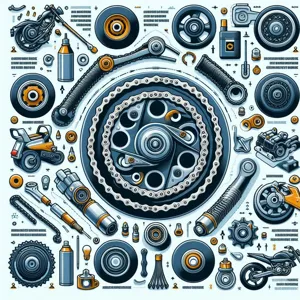
Decoding Motorbike Chains: Types and Mechanical Longevity
Credit : whatcanu.com
Your motorcycle chain is the primary conduit between engine output and rear wheel rotation. Treat it as a high-stress mechanical component rather than just a set of links. Neglecting it leads to power loss, dangerous snapped links, and premature sprocket failure. Understanding the engineering behind your chain helps you decide when to upgrade and when to perform deep maintenance.
The Engineering Behind Chain Construction
Credit : whatcanu.com
Selecting the right chain is not about buying the most expensive option. It is about matching the sealing technology to your riding environment and bike power output.
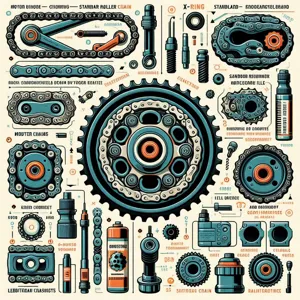
Non-Sealed Chains: These rely on direct metal-on-metal contact. Without internal seals, they are lighter and exhibit less friction, which is why racers sometimes prefer them. However, they lack protection against grit. Once road debris enters the pins, it acts like sandpaper, grinding your chain from the inside out within a few hundred miles.
O-Ring Chains: These chains feature rubber rings between the inner and outer plates. Think of these as permanent grease containers. The factory grease is trapped inside the pivot points, preventing the friction that causes chain stretch. They are the standard for modern street motorcycles because they offer a balance between durability and low maintenance.
X-Ring Chains: This is an evolution of the O-ring design. The X-profile provides four contact points instead of two. Imagine a door seal with a double flap; it keeps cold air out much better than a single strip. Because they retain lubricant more efficiently and block out more contaminants, X-rings provide the longest service life for heavy-duty or long-distance applications.
Mastering Chain Tension: The Physics of Slack
Chain tension is not about keeping the chain rigid. It is about allowing the suspension to move through its full range without putting the chain under lethal stress. If your chain is too tight, it will pull against the countershaft bearing every time you hit a bump.
The Suspension Factor: The distance between your front sprocket and rear axle changes as your swingarm moves. Always verify the slack measurement while the bike is off the stand with your weight on the seat.
The Measurement Technique: Use a vernier caliper or a ruler to check slack at the tightest point of the chain. Rotate the wheel and check multiple spots, as chains rarely stretch evenly.
Pro-Tip: If you find a spot that is significantly tighter than others, your chain has developed internal seizing. No amount of tension adjustment will fix this; you need a replacement.
Professional Maintenance Protocol
Credit : whatcanu.com
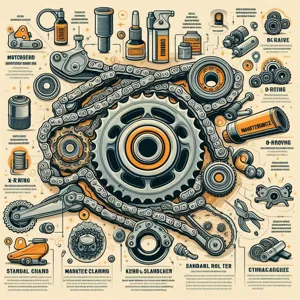
Stop cleaning your chain every time you wash your bike. Instead, build a mileage-based habit. Clean and lubricate every 300 miles, or immediately after riding through rain or heavy dust.
Precision Cleaning: Use a non-corrosive spray designed for sealed chains. Harsh chemicals like gasoline or acetone will penetrate the seals and dissolve the internal grease, effectively killing your chain from the inside.
Brush Selection: Use a nylon-bristled brush. Never use a wire brush. A single strand of wire can puncture an X-ring, allowing the factory grease to leak out permanently.
Application Strategy: Apply lubricant to the inner rollers and the side plates where the seals sit. Do not spray the entire chain blindly. Once applied, let it sit for at least 20 minutes. This allows the carrier solvent to evaporate, leaving the protective wax or grease behind.
The Centrifugal Test: If you see fresh lubricant splattered on your rear rim the next day, you used too much or didn’t wait long enough for it to set.
Critical Mistakes That Drain Your Budget
Credit : whatcanu.com
I often see riders throw away money by ignoring the mechanical synergy of the drivetrain. Avoid these common traps to maximize your components’ lifespan.
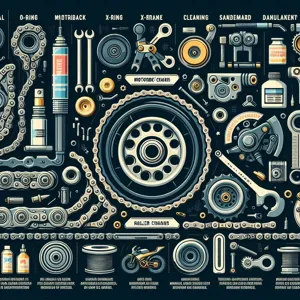
The Sprocket Trap: Never pair a brand-new chain with old, worn sprockets. Old sprocket teeth have a hooked profile that will aggressively force your new chain to stretch to match their shape. You will ruin a new chain in under 1,000 miles. Always replace the chain, front sprocket, and rear sprocket as a single set.
The Over-Tension Fallacy: Many riders mistake a tight chain for a healthy one. A chain that is too tight causes massive friction, wears out the rubber seals, and can literally snap the output shaft of your engine. Always err on the side of slightly too loose than too tight.
Ignoring Corrosion: If you store your bike in a humid garage, surface rust is a silent killer. It creates microscopic pits in the steel. Once those pits form, the chain is structurally compromised and will snap without warning under heavy acceleration.
When to Retire Your Drivetrain
Chains have a finite service life defined by elongation. You cannot fix a stretched chain by removing links. Once the internal pins have worn down, the pitch of the chain no longer matches the sprockets. If your rear axle adjusters are at the end of their travel, or if you can pull the chain away from the rear of the sprocket revealing more than half a tooth, the metal has fatigued. Replace the entire kit immediately to ensure your power delivery remains consistent and safe.