Why AWD Is Not Enough: The Physics of Winter Traction
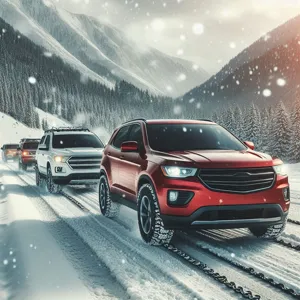
Many drivers believe an All-Wheel Drive (AWD) badge makes their vehicle invincible on ice. This is a dangerous misconception. AWD assists with acceleration, but it does absolutely nothing to help you steer or stop. When you brake, every car relies on the friction between its rubber and the road.
Think of traction like a budget: you have a limited amount of grip for each tire. If you use 90 percent of that budget to turn the wheel, you only have 10 percent left for braking. If you hit the brakes while turning too sharply, you go bankrupt on grip and slide off the road. This is why technical specifications, rather than just marketing, should drive your choice of vehicle.
The Critical Metrics for Winter Performance
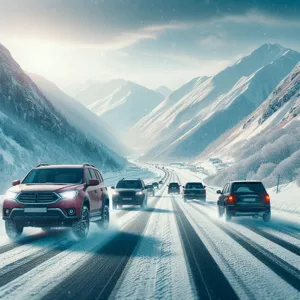
When comparing vehicles, ignore the aesthetics and look at three specific mechanical benchmarks. These define how a car manages the transition from pavement to ice.
- Torque Vectoring Speed: High-end systems like Acura’s SH-AWD can send 100 percent of available torque to a single rear wheel. This is the difference between getting stuck and powering out of a snowbank.
- Ground Clearance Thresholds: Most standard sedans offer 5.5 inches of clearance. Once snow depth exceeds this, your car acts like a snowplow, causing the chassis to lift your tires off the ground. You need a minimum of 8 inches to traverse unplowed suburban side streets.
- Tire Compound Durometer: Winter tires use a compound with a lower durometer (softness). While all-season tires harden at 45 degrees Fahrenheit, true winter tires remain pliable down to -20 degrees, allowing them to wrap around ice crystals rather than sliding over them.
Comparative Analysis: AWD vs. 4WD Systems
Not all traction systems function the same way. Understanding the engineering helps you manage your expectations on the road.
- Permanent AWD (Subaru Symmetrical): Always active. It provides the most consistent handling because the system does not have to decide when to engage. It is the best for unpredictable, mixed-surface conditions.
- Part-Time/On-Demand AWD (Toyota/Honda): These systems run in Front-Wheel Drive until wheel slip is detected. While efficient, there is a millisecond of lag before the rear wheels engage. You will feel this delay as a brief stutter when accelerating from a stop on ice.
- Terrain Management 4WD (Jeep/Ford): These systems allow you to lock differentials. This is superior for deep, heavy, wet snow where you need constant power to all four wheels regardless of individual wheel slip.
Top Vehicles Ranked by Technical Capability
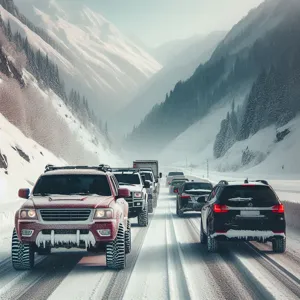
These models are selected based on their specific hardware advantages for cold-weather climates.
- Subaru Outback: Its 8.7-inch clearance and symmetrical design provide the highest stability-to-weight ratio in the crossover segment.
- Audi Q5 (Quattro Ultra): The clutch-based system anticipates slip before it happens, using sensor data to preemptively shift torque.
- Jeep Grand Cherokee (Quadra-Drive II): The rear electronic limited-slip differential makes it the only vehicle on this list capable of climbing a steep, ice-covered hill with one wheel in the air.
- Volvo XC60: Its Haldex-based system is tuned for heavy weight distribution, keeping the vehicle planted during highway lane changes on slushy roads.
- Mazda CX-5: Its predictive I-Activ AWD monitors wiper usage and outside temperature to increase rear torque engagement during rain or snow.
Field Observations: Mistakes That Lead to Crashes
After reviewing years of winter incident reports, specific operator errors appear repeatedly. These have nothing to do with the car and everything to do with physics.
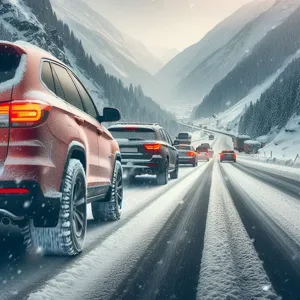
Common Mistakes to Avoid:
- The Threshold Braking Failure: In older cars without advanced ABS, drivers panic and slam the pedal. Modern cars allow you to press firmly, but you must avoid sudden, jerky inputs that upset the vehicle’s balance.
- Under-Inflated Tires: Cold air density drops tire pressure by roughly 1 PSI for every 10-degree temperature fall. Driving on under-inflated tires causes the tread blocks to squirm, which prevents the tire from biting into packed snow.
- The ‘Coffee-Cup’ Error: Drivers often rush to accelerate when the light turns green. If your tires spin, stop accelerating immediately. Spinning tires polish the snow into a slick sheet of ice, making it impossible to gain traction for the next attempt.
The Professional Setup for Winter Safety
Preparation is a technical exercise. A well-prepped car should include a portable tire inflator. If you are stuck in deep snow, you can temporarily drop your tire pressure to 15-20 PSI to widen the contact patch, provided you reinflate it immediately upon reaching clear pavement. Also, keep your fuel tank above the halfway mark. Modern fuel pumps use the fuel in the tank for cooling; running low in extreme cold can lead to pump failure and condensation in the lines.
Content updated on 2026-08-25