Why Empathy is a Cognitive Skill, Not an Emotion

Most people treat empathy as an innate, passive feeling. This is a mistake. Empathy is actually a high-level cognitive muscle that requires regular training to remain functional. Just like a bicep, if you do not challenge your brain to process perspectives outside your daily bubble, your ability to understand others will atrophy.
Think of literature as a flight simulator for your brain. It allows you to navigate the complexities of another person’s reality without the risks of real-world fallout. When you commit to reading books that deviate from your lived experience, you are essentially upgrading your internal software to process new, complex data sets.
The Necessity of Cognitive Stretching
You likely view your current worldview as objectively correct. However, your perspective is usually just a byproduct of your environment, culture, and life history. To build genuine empathy, you must actively seek out stories that force you to abandon your default settings. If a book does not challenge your assumptions, you are reading for comfort, not for development.

Error to avoid: Many readers suffer from the mirror effect. This happens when you exclusively choose books featuring characters who think and vote exactly like you. This creates an echo chamber that reinforces your existing biases rather than dismantling them.
Selecting the Right Books for Empathy
To systematically build your capacity for understanding, you must choose narratives that act as catalysts for perspective-shifting. Here are the categories and works that force your brain to move beyond its default state.
Breaking Down Behavioral Assumptions
Start by reading stories centered on characters you would typically find irritating or difficult in real life. Fredrik Backman’s A Man Called Ove is a masterclass here. The protagonist is the archetypal grumpy neighbor who pushes everyone away.
By reading his narrative, you learn that chronic anger is rarely a personality flaw. It is almost always a mask for unresolved grief or past trauma. Practical tip: Next time you interact with a difficult person at work, look for the hidden history that might explain their hostility. You do not have to agree with them, but identifying the root cause reduces your own stress response.
Navigating Systemic Realities

Empathy requires understanding the invisible structures that shape other people’s lives. Bryan Stevenson’s Just Mercy is essential because it turns abstract legal statistics into human stakes. When you read about systemic failures, you stop seeing people as data points and start seeing them as individuals caught in complex, unfair machinery.
Field experience: If you feel detached from a major social issue, stop consuming news headlines. Seek out memoirs written by those living within those systems. Personal narratives provide the granular, human detail necessary to override the biases built through detached, surface-level consumption.
The Challenge of Identity and Upbringing
We are all products of our environment. Tara Westover’s Educated acts as a mirror for your own personal development. By observing how she navigates the violent contradiction between her past and her potential, you are forced to evaluate your own belief system.
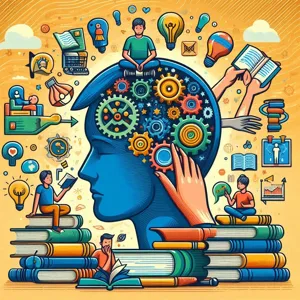
Ask yourself: Which of my values are actually mine, and which are just echoes of my upbringing? Books like this force you to interrogate your own origins, which is a prerequisite for understanding the complex origins of others.
Practical Protocols for Empathy Training
Reading is only the input. To translate these stories into actual social intelligence, you need a process. Use these three protocols to ensure the lessons stick in your long-term memory.
- The Perspective Journal: After finishing a chapter, write one sentence explaining a belief you held that the narrative challenged. This forces you to acknowledge your own biases.
- The Backstory Protocol: When someone expresses a view you disagree with, treat them like a character in a book. Do not look for holes in their argument; look for the experience that led them to that conclusion.
- The Blind Spot Audit: Commit to reading one book every three months about a demographic, profession, or culture you know nothing about. If your life is safe and predictable, your reading list should be the exact opposite.
Understanding the Theory of Mind
Deep engagement with complex fiction improves your Theory of Mind. This is a scientific term for your ability to attribute mental states—such as beliefs, intents, and desires—to others. It is the mental machinery that allows you to predict how someone will feel in a specific scenario.
Think of it like learning a second language. At first, it is exhausting and requires constant conscious effort. Over time, it becomes an automated habit. You stop viewing the world through a narrow, personal window and start viewing it through a panoramic lens. This is not about being kinder; it is about being more effective, more observant, and more capable of navigating any social environment.
Content updated on 2026-09-29