Why Your Reading List Is Stagnant
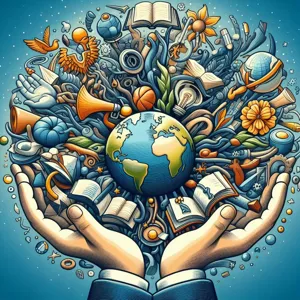
Most readers fall into a comfort trap. You likely pick books that mirror your own life, values, or familiar geographic settings. Think of your current perspective as a smartphone navigation app that only knows the main highway. It works fine for short trips, but it fails the moment you encounter a detour or a new terrain. Reading diverse cultures is the process of updating your internal GPS data.
Many people treat literature like a trophy room. They collect bestsellers to feel well-read without actually challenging their core beliefs. This is passive consumption. To truly understand different cultures, you need to stop reading for validation and start reading for cognitive friction. You must seek out narratives that force you to reconsider how you view authority, success, and community.
How to Select Books That Actually Broaden Horizons
Do not rely on mainstream marketing algorithms. These systems often favor books that are easily digestible or exoticized. Use these specific filters to curate a list that provides genuine insight rather than superficial tourism.
- Verify Insider Perspective: Does the author live or have they lived the experience they describe? Avoid books where the author treats a culture as a prop. Authentic voices provide granular, non-stereotypical details that a research-based outsider will almost always miss.
- Focus on Modern Tensions: A stagnant culture is a myth. Look for stories that examine the internal friction of a society. How are people debating gender roles in that country? How are they fighting political or economic shifts? The struggle is where the truth lives.
- Map Intersectional Realities: A single narrative is rarely accurate. Understand that a wealthy professional in Mumbai experiences a fundamentally different reality than a laborer in a rural village. Choose books that capture these conflicting layers rather than a monolith.
Curating Your Library: A Practical Selection

Forget the standard curriculum. If you want to understand the world, you need to read works that address contemporary human experiences in non-Western contexts. Here are four essential works that require you to recalibrate your expectations.
The Memory of Love by Aminatta Forna
Forna explores the aftermath of the Sierra Leonean civil war. It is not just a historical account; it is a study of how trauma warps individual perception. Actionable takeaway: Notice how public history ignores private cost. Use this to question how your own government’s historical narrative might mask individual suffering.
Convenience Store Woman by Sayaka Murata
This Japanese novel examines the obsession with productivity. It follows a protagonist who finds comfort in the rigid structure of a store while others view her as a failure. Use this book to audit your own biases regarding work-life balance and social non-conformity.
Homegoing by Yaa Gyasi

Gyasi traces the descendants of two sisters across generations. It demonstrates how systemic forces like slavery and colonization create divergent paths for individuals. This is a manual for understanding institutional legacy. It makes the concept of systemic cause and effect concrete and personal.
Exit West by Mohsin Hamid
Hamid shifts the focus from migration statistics to the psychological state of displacement. By stripping away political jargon, he makes the fear and hope of a refugee tangible. It turns a news headline into a human experience you can actually relate to.
Avoiding the Performative Reading Trap
A common mistake is treating your book list like a shopping list. You read one book about Chile or Nigeria and think you now understand the culture. This is dangerous. It builds a false sense of expertise based on a single, limited viewpoint.

Field Experience Tip: Always pair your reading with current local journalism. If you are reading a book about Mexico, follow a local newspaper or digital outlet from Mexico City for the same duration. This provides the difference between the emotional depth of a novel and the raw, fast-moving friction of daily news. It prevents you from turning a living culture into a static museum exhibit.
Building a Sustainable Habit of Perspective
You do not need to read fifty books a year. You need to read with high intentionality. Use these three methods to ensure the information actually changes your worldview.
- Run the Perspective Simulation: Once you finish a chapter, stop and ask yourself: How would my decisions change if I held this character’s cultural constraints? Don’t just observe; simulate the logic within your own mind.
- Debate, Don’t Discuss: Find a reading partner who holds a different worldview than you. Discussing a book with someone who interprets the protagonist’s choices differently than you do is where the real learning happens. Consensus is boring; disagreement is informative.
- Diversify the Input Media: Use audiobooks or long-form documentaries to complement your reading. Hearing the cadence of a language or seeing the geography of a city adds a layer of reality that text cannot provide alone.
Remember, culture is not a final destination. It is a shifting, complex, and sometimes messy target. By building an active engagement process, you improve your ability to navigate a world that is fundamentally interconnected. Treat every book as an opportunity to update your mental software, not just a way to fill time.
Content updated on 2026-10-03