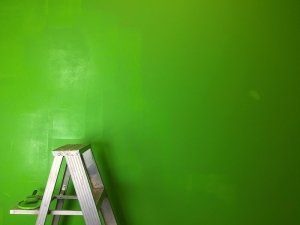
A portable green screen is a collapsible backdrop in a bright, even green. Software replaces that color with any background you want, an effect called chroma keying. Streamers, remote workers and YouTubers use them because they give a cleaner result than the blurry virtual backgrounds built into video apps.
The main types
Pop-up panels. A fabric screen stretched on a spring frame or a pull-up case, like a projector screen. Pull-up models sit on the floor or a desk and set up in seconds, then roll back into their case. The most popular choice for streaming.
Chair-mounted screens. A circular screen that straps to the back of your chair. Compact and cheap, but only covers what is directly behind your head, so it suits tight framing on a webcam.
Backdrop kits with stands. A large sheet hung between two stands. Covers full-body shots and groups, but takes space and time to set up, and fabric wrinkles need steaming.
Size and fabric
Measure what your camera actually sees. For a webcam at a desk, a screen around 4 by 5 feet usually covers the frame. Standing or moving shots need much more. Choose a matte, wrinkle-resistant fabric; shiny material reflects light and creates hot spots that the software cannot key. Green works for most people; blue is better if you wear green or have blond hair that picks up green reflections.
Lighting is the real secret
A cheap screen with good lighting beats an expensive one with bad lighting.
- Light the screen evenly, with one or two soft lights aimed at it. Shadows and dark corners break the key.
- Light yourself separately, with a key light in front of you at about 45 degrees.
- Sit at least 3 to 6 feet in front of the screen. Distance prevents your shadow from falling on it and reduces green “spill” on your skin and hair.
- Avoid mixing daylight and lamps of different colors.
Software settings
OBS Studio (free), Streamlabs, Zoom, Teams and most editing apps have chroma key filters. Start with the default “green” setting, then adjust similarity and smoothness until the edges are clean without eating into your hair. Turn off the app’s built-in “virtual background AI” when using a real screen, since the two fight each other.
Common problems
- Flickering edges: usually uneven lighting or a camera set to auto exposure. Lock the exposure.
- Holes in your shirt: you are wearing green.
- Fuzzy outline: low camera resolution or heavy compression. A better webcam helps more than another screen.
If you are setting up a streaming room, our guide to streaming PC games on Twitch or YouTube covers the software and encoding side. For phone-made tutorials, see how to screen record on iPhone.