
What defines a bull market beyond the headlines?
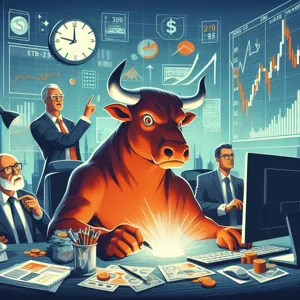
A bull market is not merely a period of rising prices. In financial terms, it is defined by a sustained increase in asset values—typically a rise of 20% or more from recent lows. Think of it like a tide coming in; when the tide is high, almost every ship rises, regardless of its individual hull quality. However, a true bull market is driven by robust economic fundamentals, not just speculative noise.
How long does a bull market actually last?
The duration of these cycles varies significantly. Historical data shows that while some bull markets exhaust themselves within months, others can persist for years. The average bull market lasts between 2.7 to 3 years, though exceptions exist. For instance, the post-2009 expansion lasted over a decade. Duration is rarely fixed because it depends on the intersection of three specific forces: corporate earnings, central bank interest rate policies, and public confidence.
The mechanics of an upward trend

When the economy enters a growth phase, companies report higher earnings. This acts as the engine of the market. When earnings grow, stock prices follow. To visualize this, imagine a cyclist climbing a hill. The strength of the cyclist’s legs is the corporate profit, while the wind pushing from behind is the favorable interest rate environment provided by central banks.
- Corporate Earnings: The most reliable indicator of long-term growth.
- Interest Rates: Lower rates make borrowing cheaper, encouraging companies to expand.
- Economic Expansion: Rising GDP and lower unemployment signal a healthy consumer base.
The lifecycle of a bull phase
Bull markets do not start with a bang; they usually begin in skepticism. Following a crash or a bear market, prices are low, but sentiment is bruised. This is the accumulation phase. As the economy stabilizes, the market enters the public participation phase, where more investors return. Finally, the market hits the stage of excess or euphoria, where valuations decouple from reality. This is when prices reach levels that defy logic, which is often the precursor to a peak.
Real-world lesson: Avoiding the trap of euphoria

A common mistake investors make is increasing their risk exposure during the final stage of a bull market. When your neighbor, who has never invested, starts offering you stock picks at a dinner party, the market is likely approaching a top. This is the classic signal of retail euphoria. Experienced investors treat this as a sign to tighten their stop-loss orders rather than pouring in fresh capital.
How to track the health of a bull market
You cannot rely on daily price movements to gauge the length of a cycle. Instead, monitor the following metrics to see if the engine is still running or if it is starting to overheat:
- Valuation Multiples: Keep an eye on Price-to-Earnings (P/E) ratios. If the average P/E of the market is significantly above historical averages, the market is expensive.
- Market Breadth: Check if a wide range of stocks is moving up or if only a handful of mega-cap companies are keeping the indices afloat. A narrowing market is a warning sign.
- Yield Curve: Monitor the gap between short-term and long-term interest rates. An inverted yield curve, where short-term debt costs more than long-term, is historically a leading indicator of an eventual recession.
Strategic positioning during the climb

Rather than trying to time the peak, most successful investors use a systematic approach. If you are in the middle of a long-term bull trend, focus on the quality of your assets. Shift your portfolio toward companies with strong cash flows rather than speculative, high-growth startups that rely on cheap debt. If rates begin to rise, these speculative companies are often the first to suffer.
The reality check: It will end
Recognize that bull markets end because the very factors that drive them eventually hit a wall. Inflation forces central banks to hike rates, which puts pressure on corporate margins. As the cost of doing business rises, growth slows, and investors shift from greed to fear. Your goal is not to predict the exact day the market turns, but to ensure your portfolio is resilient enough to handle a shift in the economic season. Keep your asset allocation aligned with your goals, ignore short-term volatility, and maintain a focus on underlying value.
Contenu mis a jour le 2026-08-22