
Investing: What are ETFs and how do they work?
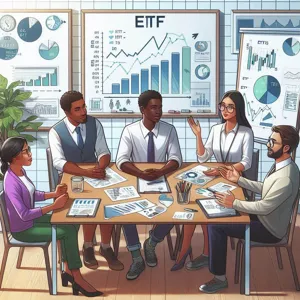
Think of an Exchange-Traded Fund (ETF) as a professional fruit basket. Instead of picking every single apple or orange in the market yourself, you buy a pre-arranged basket. You get exposure to an entire orchard with one single purchase. This is the primary mechanism of ETFs: grouping various assets into a single fund that trades on the stock market.
The Mechanics: Passive Management and Efficiency
Most ETFs are passively managed. This means they track a specific index, like the S&P 500, rather than relying on a fund manager to pick winners. It is like an automated pilot that follows a flight path set by the market. Because the fund follows a pre-defined list of stocks, it does not require expensive research teams.

This efficiency translates into lower costs for you. An average active mutual fund might charge an expense ratio of 1.0% or more. Many broad-market ETFs, such as the Vanguard S&P 500 ETF (VOO), charge as little as 0.03%. If you invest $10,000, you pay $3 per year in fees with the ETF, compared to $100 with the active fund. Over 30 years of compounding, that small difference saves you thousands of dollars.
The Creation and Redemption Process
You might wonder how an ETF tracks an index so accurately. This happens through the creation and redemption process. Large financial firms, known as Authorized Participants, can trade shares of the ETF directly for the underlying stocks. This ensures the share price of the ETF remains aligned with the value of the assets it holds. It prevents the price from drifting far from reality.
Quantifiable Advantages for Your Portfolio
- Cost Efficiency: Expense ratios for major index ETFs are often 10 to 50 times lower than traditional mutual funds.
- Tax Efficiency: Because ETFs create and redeem shares in-kind, they generate fewer capital gains distributions. This keeps more money in your pocket during tax season.
- Intraday Liquidity: Unlike mutual funds that only trade once at the end of the day, you can sell your ETF shares at any second the market is open.
- Transparency: You can view the full list of holdings for almost any ETF on the issuer’s website, showing you exactly where your capital is allocated.
Field Insights: Avoiding Common Pitfalls

Do not be fooled by high-frequency trading ads. Beginners often make the mistake of over-diversification. Owning 15 different ETFs often results in owning the same 500 stocks across multiple funds. This creates a administrative burden without adding true protection.
Another trap is the bid-ask spread. This is the difference between the price a seller wants and the price a buyer is willing to pay. On large ETFs like the SPDR S&P 500 (SPY), the spread is often just one cent. However, on niche, low-volume funds, the spread can be wide, costing you an immediate loss upon entry.
How to Check for Hidden Costs
- Trading Volume: Stick to funds with high average daily volume. High liquidity keeps the bid-ask spread narrow.
- Tracking Error: Check how closely the ETF mimics its target index. A good ETF should stay within a few basis points of its benchmark.
- AUM (Assets Under Management): Choose funds with at least $100 million in assets to ensure they remain viable and don’t close unexpectedly.
Actionable Steps for Selecting Your First ETF

Your strategy should be simple. If you are a long-term investor, focus on broad-market indices. A total stock market ETF provides exposure to thousands of companies at once. It eliminates the risk of a single company failure impacting your entire financial future.
Once you have selected a fund, check the ‘Expense Ratio’ on the fund’s fact sheet. Ignore any marketing fluff about ‘beating the market.’ Look for consistency and low overhead. If you are building a core portfolio, 3 to 5 funds covering large-cap, international, and bond markets are usually sufficient to achieve a balanced, high-performing asset allocation.
Contenu mis a jour le 2026-08-22