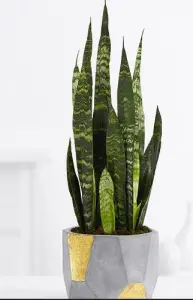
Snake plants (now classified as Dracaena trifasciata, but still sold as Sansevieria) are among the easiest houseplants to multiply. There are three methods. Division is the fastest; leaf cuttings take patience but turn one leaf into several plants.
Before you start
The best time is spring or summer, when the plant is actively growing. You need a clean, sharp knife, a pot with drainage holes and a fast-draining potting mix such as cactus or succulent soil.
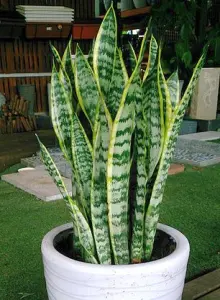
One thing to know: if you propagate a variegated variety with yellow edges (like ‘Laurentii’) from leaf cuttings, the new plants usually come back plain green. To keep the yellow edges, use division.
Method 1: Division
- Take the plant out of its pot and shake off some soil.
- Look for natural clumps, each with its own leaves and roots or rhizome.
- Cut them apart with a knife, making sure each piece has roots.
- Pot each division in fresh mix and water lightly.
This gives you full-size plants right away.
Method 2: Leaf cuttings in water
- Cut a healthy leaf at the base and then into sections about 3 to 4 inches long. Mark which end was at the bottom: cuttings upside down will not root.
- Let the cuts dry for a day or two so they callus over.
- Stand the bottom end in about an inch of water in a bright spot out of direct sun.
- Change the water every week. Roots usually appear within a few weeks; new pups may take a few months.
- Pot the cutting in soil once the roots are an inch or two long.
Method 3: Leaf cuttings in soil
Prepare and callus the sections the same way, then push the bottom end about an inch deep into moist succulent mix. Keep the soil barely damp and the pot in bright, indirect light. It is slower than water, but the cuttings do not need to adapt when you transplant.
Aftercare
Snake plants die far more often from overwatering than from neglect. Water only when the soil is completely dry, which may be every two to four weeks, and even less in winter. Note that the ASPCA lists snake plants as toxic to cats and dogs, so keep new pots out of reach of pets.
For more ways to fill your home with easy plants, see the best ways to add greenery to your home.