How do I learn to play tennis on a budget?
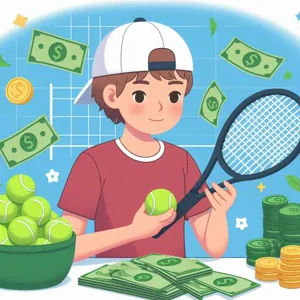
Learning tennis does not require a country club membership or thousands of dollars in private coaching. You can reach a competitive level by treating your development like a lean startup: minimize overhead, maximize practice frequency, and use data-driven feedback loops. Here is how to master the sport while keeping your finances intact.
Smart Equipment Sourcing
New players often waste money on expensive rackets that don’t match their skill level. A beginner does not need a $250 carbon-fiber frame. Instead, buy a used frame from reputable manufacturers like Wilson, Head, or Babolat. Look for models produced in the last five to seven years; they offer almost identical performance to current rackets for a fraction of the cost.
- Check the specifications: Look for a head size between 98 and 105 square inches and a weight between 280 and 300 grams. This is the sweet spot for balance and control.
- The restring investment: A used racket often comes with old strings. Pay $20 to $30 for a fresh set of synthetic gut strings. This provides more responsiveness than a $300 new racket with dead factory strings.
- Pressureless balls: Standard balls lose bounce after one match. Pressureless balls rely on rubber core thickness rather than internal gas, lasting months instead of hours.
- Footwear is non-negotiable: Never wear running shoes. They lack lateral support, which leads to rolled ankles. Spend your budget on quality tennis-specific shoes, even if they are last season’s model on clearance.
Optimize Your Training Environment
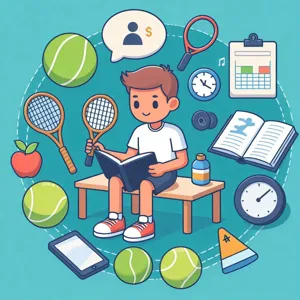
Public courts are your primary asset. To make them work for you, shift your training to off-peak hours. Municipal facilities often have lower demand during weekday mornings or mid-day slots. Using these times effectively can save you hundreds in court fees annually.
If you lack a partner, find a practice wall. A brick or concrete wall is the most efficient coach you will ever find. It provides immediate, repetitive feedback that a human partner cannot sustain. To make wall practice productive, use chalk to mark a line at 36 inches high to simulate the net. If your ball lands below that line, the shot is a failure.
Leveraging Self-Analysis Over Paid Coaching
You do not need a coach to fix your swing. You need an objective eye. Use your smartphone to record your groundstrokes from the side and back. Compare your video side-by-side with professional clips using free apps like Hudl Technique.

Focus on one technical element at a time. For example, spend three sessions focusing strictly on your contact point. If you watch a video on backhand technique, don’t just mimic it. Break it down into phases: the unit turn, the drop, and the follow-through. Drill only one phase for 15 minutes before moving to the next.
Common Pitfalls and Field Experience
A common mistake for beginners is attempting to play full sets too early. When you keep score, your focus shifts from technique to winning. This forces you into bad habits to get the ball over the net at any cost.
- The rally goal: Spend your first 20 hours of play focusing on ‘cooperative rallying.’ Your goal is to keep the ball in play for ten shots with your partner.
- Avoid emotional leakage: Tennis is a game of errors. If you miss a shot, do not dwell on it. Use the four-second rule: take four seconds to adjust your grip, breathe, and move to the next point.
- Shadow swinging: You can practice at home. Perform 50 repetitions of your stroke mechanics in front of a mirror daily. This builds muscle memory without burning through balls or needing court time.
Data-Driven Progression

Tennis progress is measured by consistency. If you play for three hours once a week, your neuromuscular system forgets the mechanics between sessions. Three sessions of 45 minutes are significantly more effective than one marathon session.
Track your progress with a simple log. Note the number of successful rallies and your serve percentage. If you see your average rally length increasing from 3 to 7 over the course of a month, you have objective proof that your technique is improving. This approach eliminates the need for expensive lessons by turning you into your own analyst.
Building a Cost-Effective Network
Find partners through local apps like PlayYourCourt or regional tennis Facebook groups. When you play with others, share the cost of new balls. One can of balls can last three sessions if you rotate them and store them in a cool, dry place. By prioritizing technique over flash and consistency over intensity, you can build a high-level game on a shoestring budget.
Content updated on 2026-08-27