Mastering the Mental Game: How to Improve Your Basketball Game Sense
Credit : whatcanu.com
Game sense is often confused with raw athleticism, but it is actually a distinct mental muscle. Think of it like a GPS for the court: while your physical skills represent the engine of your car, your game sense is the navigation system that tells you exactly where to turn and when to accelerate. Without it, you are just running fast in the wrong direction.
Improving this requires shifting your focus from individual drills to situational awareness. Use these actionable strategies to transform how you perceive and react to the flow of a game.
Develop Your Peripheral Vision Through Dribbling Drills
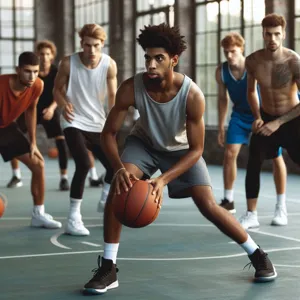
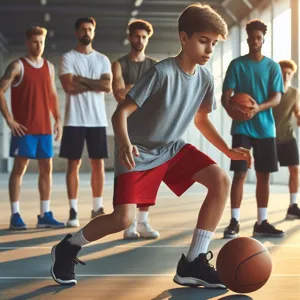
Most players make the mistake of staring at the ball while dribbling. This narrows your field of vision to the floor. To improve game sense, you must be able to see the entire court without focusing on your hands.
The Two-Ball Scan: Dribble two balls simultaneously while keeping your head up and scanning the perimeter. This forces your brain to delegate the ball-handling to muscle memory, freeing up your cognitive power to read the defense.
The Number Call: Have a teammate hold up fingers at various points around the court while you dribble. You must call out the number immediately without losing your rhythm. This mimics the split-second decision-making required during a live game.
Master the Art of the Pre-Catch Read
Credit : whatcanu.com
Elite players know what they are going to do before they touch the ball. This is the difference between a reactive player and a proactive one.
Error to avoid: Waiting until the ball hits your hands to scan for an open teammate or a shooting lane. By then, the defender has already closed the gap.
Actionable exercise: During 3-on-3 scrimmages, force yourself to make a decision—pass, shoot, or drive—within one second of receiving the ball. This artificial time constraint forces your brain to process defensive rotations before the pass even arrives.
Understand Defensive Rotations and Spacing
Basketball is a game of shifting geometries. When an offensive player drives to the hoop, the defense must shrink. This creates openings elsewhere on the court. To improve your game sense, stop watching the ball and start watching the space.
Identify the ‘Help’ Defender: In every play, locate the defender who is responsible for helping if your teammate beats their primary cover. If you are that teammate, your job is to occupy that help defender to open up a passing lane.
Spacing rules: Keep at least 15 feet between you and your teammates. If two players are standing in the same corner, they allow one defender to guard both people, effectively killing the offense.
Use Film Analysis to Debug Your Decisions
Credit : whatcanu.com
Watching professional games is fine, but watching your own footage is where the real growth happens. Film removes the emotional bias of a game and shows you exactly what happened.
When reviewing your games, pause the video before you make a pass or a shot. Ask yourself: What did I see? What did I miss? Often, you will realize that a teammate was wide open on the weak side while you were forcing a contested shot. Seeing this pattern repeated 3 or 4 times is usually enough to hard-wire the correct decision into your brain for the next game.
Communicating With Purpose
Communication is the connective tissue of a successful team. However, shouting randomly isn’t enough. You need to use specific, high-information verbal cues.
Instead of yelling ‘watch out’ (which tells your teammate nothing), use clear commands like ‘screen left,’ ‘drop,’ or ‘switch.’ Think of this like a pilot and air traffic control: the goal is to relay critical data as concisely as possible to prevent a collision or a breakdown in defense.
Leverage Situational Basketball IQ
Credit : whatcanu.com
Game sense is also about managing the clock and the scoreboard. If your team is up by five points with two minutes left, your goal should be to bleed the clock and get the best possible shot, not the fastest one.
Practice ‘Clock Management’ drills during your solo workouts. Set a timer for 24 seconds and force yourself to execute a specific play or movement pattern that leads to a quality shot in the final 5 seconds. This builds the discipline to stay composed when the pressure is highest.
The Final Checklist for Progress
Improving game sense is not an overnight process, but consistent, intentional effort will yield measurable results. Follow this checklist to stay on track:
Keep your eyes off the ball during warmups to improve your field of vision.
Analyze one quarter of your game film every week to identify repeating mistakes.
Communicate defensive switches loudly and early.
Practice game-scenario drills that require a decision within one second.
By shifting your focus from ‘playing hard’ to ‘playing smart,’ you will naturally find yourself in better positions, making the game feel slower and easier to navigate. Stay patient, keep your head up, and prioritize the read over the reaction.