How Astronomers Use Gravitational Lensing to Study the Universe
Credit : whatcanu.com
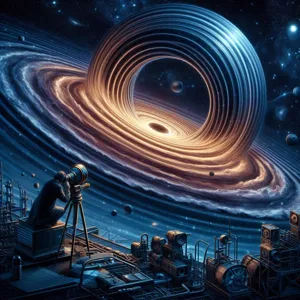
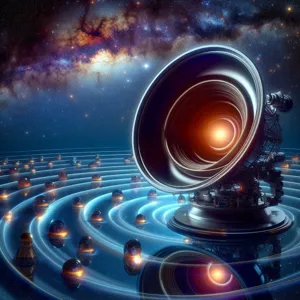
Gravitational lensing is not just a theoretical concept; it is the most powerful natural telescope available to modern science. When a massive structure—such as a galaxy cluster—sits between Earth and a distant light source, its gravity acts like a physical lens. This gravity warps space-time, bending the path of incoming light. For an astronomer, this provides a massive boost in resolution, effectively turning the universe into an optical instrument.
Think of it like a funhouse mirror at a carnival. When you stand in front of one, your reflection is stretched or compressed depending on the curvature of the glass. In space, massive clusters of dark matter provide the curvature, taking the faint, distant light from the early universe and focusing it so our instruments can finally resolve it.
The Three Operational Methods of Gravitational Lensing
Credit : whatcanu.com
To use this phenomenon effectively, astronomers categorize lensing into three distinct methodologies. Each serves a specific purpose in cosmic research:
Strong Lensing: This involves massive galaxy clusters that create visible distortions like Einstein rings or multiple images of the same object. It allows us to view individual star-forming regions in galaxies billions of light-years away that would otherwise be undetectable.
Weak Lensing: This is a statistical approach. Because most light bending is tiny, we cannot see it in a single galaxy. Instead, we measure the subtle, average alignment of millions of galaxies across a large patch of sky. This is how we map the distribution of dark matter across the cosmic web.
Microlensing: This is the forensic tool of the trade. When a single star passes in front of another, the brightness of the background star briefly spikes. This is currently our most sensitive method for detecting Earth-sized exoplanets orbiting distant stars.
Quantifying the Invisible: The Mass Measurement Protocol
The core utility of lensing is its ability to weigh the universe. Because light deflection is mathematically proportional to mass, we can derive the exact gravitational pull of an object without relying on its visible brightness. This calculation is the primary evidence for the existence of dark matter.
Credit : whatcanu.com
If you are analyzing astrophysical data, remember this rule: visible mass accounts for only a fraction of the observed bending. The discrepancy between what we see and the degree of light deflection provides a precise map of invisible dark matter. If the light bends by 10 units but visible stars only account for 1, the remaining 9 units represent the density of dark matter in that sector.
Methodological Challenges and Error Avoidance
A common error among junior researchers is failing to account for intrinsic galaxy morphology. Not every elongated galaxy is lensed; many are naturally oval-shaped or irregular. You must use sophisticated statistical models to distinguish between a galaxy’s actual shape and the distortion caused by a lens.
Credit : whatcanu.com
To refine your research, prioritize these steps:
Filter for Alignments: Look for recurrent geometric patterns, such as arcs and multiple identical images, rather than relying on the shape of a single isolated object.
Data Filtering: Use space-based data like that from the James Webb Space Telescope (JWST). Ground-based observations suffer from atmospheric turbulence, which introduces a ‘blur’ that can be mistaken for weak lensing signals.
Cross-Validation: Always compare your lensing mass estimates against X-ray data, which measures the temperature and density of hot gas within clusters.
Future-Proofing Your Research: The Next Decade
The field is shifting from small-scale observation to massive data sets. The upcoming Vera C. Rubin Observatory will conduct an all-sky survey, identifying potentially hundreds of thousands of new lenses. We are moving from studying “lucky” alignment events to performing high-precision statistical surveys of the entire sky.
For those looking to enter this field, focus on mastering machine learning algorithms. We are currently drowning in imaging data, and human eyes are no longer sufficient to flag candidates efficiently. Automating the identification of gravitational arcs is the next major bottleneck that needs solving. By automating the detection of these events, we can map the growth of structure in the universe with unprecedented speed, moving closer to understanding the evolution of the cosmic web from the Big Bang to the present day.