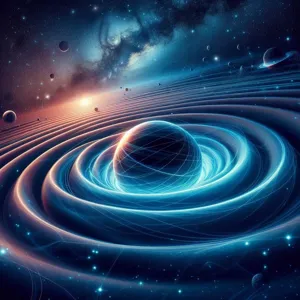
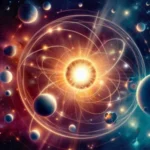
Gravitational waves are oscillations in spacetime caused by accelerating massive objects. Imagine a trampoline under the weight of a bowling ball; if you shake the ball, waves ripple outward across the fabric. Gravitational waves behave similarly, passing through all matter unimpeded. Scientists categorize these ripples based on their frequency and source, similar to how we divide sound into bass, mid-range, and treble.
Stellar-Mass Waves: The High-Frequency Chirps
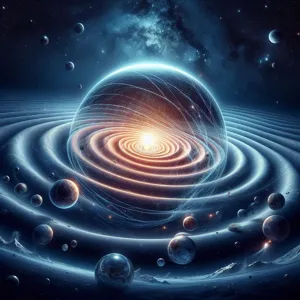
Stellar-mass waves originate from the coalescence of black holes or neutron stars, typically 3 to 100 times the mass of our Sun. Current ground-based interferometers like LIGO and Virgo function as high-frequency detectors for these events. When two compact objects orbit one another, they lose orbital energy, causing them to spiral inward and finally collide.
The Signal: These events produce a characteristic chirp—a signal that rapidly increases in both frequency and amplitude over a few seconds.
Technical Insight: Because the signal is short, we use matched filtering—a technique where computers compare raw data against pre-calculated theoretical templates—to extract the signal from seismic noise.
Field Reality: Since 2015, LIGO has confirmed over 90 merger events, turning gravitational wave detection into a robust observational tool for astrophysics.
Supermassive Black Hole Mergers: The Cosmic Bass
Credit : whatcanu.com
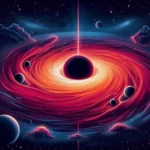
At the core of most galaxies reside supermassive black holes with masses millions of times that of the Sun. When galaxies merge, these giants eventually orbit and collide. Due to their immense size, their gravitational signals vibrate at extremely low frequencies, far below the sensitivity range of Earth-based detectors.
Think of this as the difference between a high-pitched whistle and a sub-woofer; ground detectors catch the whistle, but we need a different approach for the bass. The upcoming LISA space observatory will use three spacecraft separated by 2.5 million kilometers to act as a laser interferometer in vacuum, allowing us to detect these slow-moving, massive ripples.
Continuous Waves: The Persistent Wobble
Credit : whatcanu.com
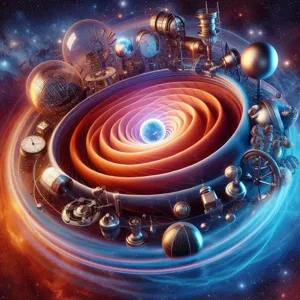
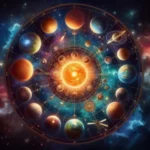
Continuous waves are emitted steadily rather than as a singular cataclysmic event. They are typically produced by rapidly rotating neutron stars with slight structural asymmetries. If a neutron star has a surface irregularity—even one just a few centimeters high—its rotation creates a constant gravitational wobble.
Detection Challenge: These signals are incredibly weak. Unlike the explosive merger, a continuous wave requires months of integration time to distinguish the signal from detector background noise.
Common Error to Avoid: Many observers mistake the lack of a ‘loud’ detection for an absence of data. In reality, finding these waves is a statistical game of patience where we filter out persistent hums over long datasets.
The Stochastic Background: The Universal Hum
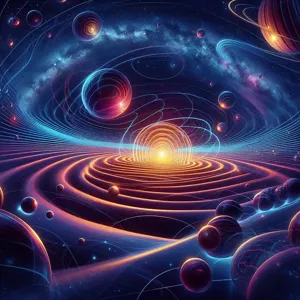
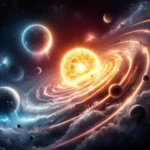
The stochastic gravitational wave background represents the aggregate noise of billions of distant, unresolved events occurring throughout cosmic history. Imagine being inside a crowded stadium; you cannot isolate individual conversations, but you hear a constant, underlying roar. That roar is the stochastic background.
Credit : whatcanu.com
In 2023, the NANOGrav collaboration provided significant evidence for this background using Pulsar Timing Arrays. By treating pulsars—highly magnetized, rotating neutron stars—as precise metronomes across the galaxy, they identified a global timing shift. This shift suggests these waves provide a snapshot of the universe’s condition just moments after the Big Bang.
Why Wave Classification Drives Discovery
Categorizing these waves is essential for multi-messenger astronomy. When we classify a signal correctly, we know exactly which instruments to prioritize. For instance, the 2017 detection of a neutron star merger (GW170817) allowed optical telescopes to confirm that these events are the primary cosmic factories for heavy elements like gold and platinum.
How to Analyze Data Like a Professional
If you want to track active research, skip the general news and access the Gravitational Wave Open Science Center (GWOSC). When reviewing their logs, focus on the Signal-to-Noise Ratio (SNR). An SNR above 8 is the standard threshold for claiming a detection. If the SNR is lower, the data is likely obscured by noise, requiring advanced Bayesian statistical filtering to verify. Mastering the distinction between these four types allows you to look at raw detector plots and immediately understand the physical mechanism unfolding in deep space.