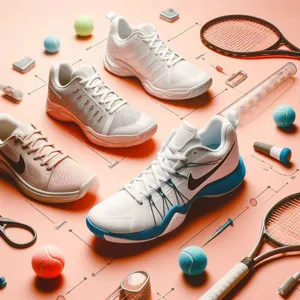
Running shoes are built for forward motion. Tennis is full of sideways movement, sudden stops and slides, which is why court shoes have flatter, more stable soles and stronger sides. The right pair protects your ankles and knees and helps you move better.
Credit : whatcanu.com
Why running shoes are not enough
Running shoes have soft, high heels and little lateral support. On a tennis court, they can roll over during side-to-side moves, increasing the risk of ankle sprains. Tennis shoes have a lower profile, reinforced uppers and outsoles designed for lateral grip.
Know your foot type
A simple “wet test”, stepping on paper with a wet foot, gives an idea of your arch:
Flat feet (low arches) often roll inward (overpronation). Look for stability shoes with firm support under the arch and a solid heel counter.
High arches absorb shock less well. Look for more cushioning and a flexible midsole.
Neutral arches can wear most models; choose by comfort and court surface.
If you use orthotics, take them with you when trying shoes. A podiatrist or physiotherapist can advise on persistent foot pain.
Credit : whatcanu.com
Width and fit
Several brands offer wide versions. Your toes should have a thumb’s width of space at the front, the heel should not slip, and the midfoot should feel secure without pressure. Try shoes in the afternoon, when feet are slightly swollen, and wear the socks you play in. Move sideways in the shop.
Outsoles for each surface
Hard courts: durable outsoles with a modified herringbone pattern. Some brands offer a durability guarantee.
Clay: a full herringbone pattern that grips loose surfaces and releases clay easily.
Grass: shoes with small nubs; required at many grass clubs.
All-court shoes are a good compromise if you play on several surfaces.
When to replace them
Replace tennis shoes when the outsole is worn smooth in key areas, the cushioning feels flat, or the upper no longer supports your foot. Regular players often need a new pair every few months. Worn shoes are a common, avoidable cause of injuries; see preventing tennis injuries.