
How Tennis Court Surfaces Rewrite the Rules of Engagement

In tennis, the court surface is not just a backdrop; it is a fundamental component of the game mechanics. Think of it like driving a vehicle: the same car performs differently on ice, wet pavement, or dry asphalt. On a tennis court, the surface dictates the friction, ball speed, and bounce height. Failing to adjust your tactics to these physics is the fastest way to lose a match.
Clay Courts: The Physics of Friction and Spin
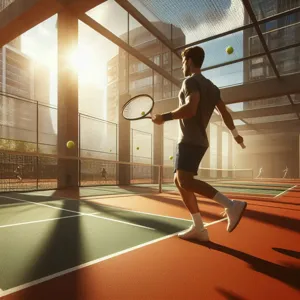
Clay courts are composed of crushed brick or shale. Unlike rigid surfaces, clay particles move under your feet. This creates a high-friction environment that absorbs the kinetic energy of the ball, significantly slowing its horizontal velocity while increasing its vertical bounce.
- Master the Slide: On clay, stopping abruptly can cause injury. Instead, treat the court like a polished wooden floor. Glide into your shots to maintain momentum and balance.
- Leverage Heavy Topspin: Because the ball bounces higher on clay, topspin is your best friend. A ball hit with heavy topspin can bounce above your opponent’s shoulder height, forcing them to hit a weak, defensive shot from an uncomfortable position.
- Patience is a Metric: Statistical data shows that rallies on clay are on average 30 to 40% longer than on hard courts. Do not aim for a winner on the third shot. Construct your point, move your opponent side-to-side, and wait for the short ball.
Field Experience: The Common Clay Pitfall
Many amateur players treat clay like a hard court. They try to hit flat winners from the baseline. This is a losing strategy because the ball loses speed as it crosses the net, giving your opponent ample time to track it down. Shift your mindset from finishing the point to managing the rally until you find a definitive gap.
Grass Courts: The Economy of Time

Grass is the fastest surface in tennis. The ball stays low and often skids rather than bouncing upward. Because the surface is organic and slightly uneven, the ball can change trajectory upon contact with the ground.
- Shorten Your Backswing: You have roughly 20% less time to react on grass compared to clay. A long, looping backswing will leave you late on the ball. Keep your preparation compact and tight.
- The Serve-and-Volley Advantage: Because the ball stays low, opponents struggle to hit effective passing shots. Attacking the net immediately after your serve puts immense pressure on your opponent’s return mechanics.
- Knee Bend Protocol: Since the ball stays close to the turf, you must lower your center of gravity. If you play standing tall, you will consistently hit the ball into the net or frame your shots.
Hard Courts: The Tactical Neutral Ground

Hard courts consist of concrete or asphalt covered in acrylic layers. They are categorized by the ITF (International Tennis Federation) into categories ranging from Category 1 (Slow) to Category 5 (Fast). Most recreational courts are Category 3, providing a consistent, predictable bounce.
- Equipment Selection: Unlike clay, hard courts provide high traction. Using specialized clay-court shoes with deep herringbone patterns on a hard court creates excessive grip. This puts unnecessary torque on your ankles and knees. Stick to hard-court specific outsoles that offer a balance of stability and slide.
- Shot Placement Over Velocity: On hard courts, the ball speed remains relatively constant. Instead of trying to overpower your opponent, focus on hitting to corners. If you can force your opponent to run two meters, the physics of the court will make their return significantly harder to control.
- Monitor Surface Temperature: Heat changes the properties of the acrylic surface. In high temperatures, the court expands, which increases the ball’s bounce and speed. If you are playing at midday in mid-summer, shorten your rallies, as the ball becomes much more difficult to contain.
Strategic Summary for Match Preparation
Adapting your style is not just about technique; it is about calibrating your internal clock to the surface. Before you begin your warm-up, observe how the ball reacts to your first few groundstrokes.
- Test the Bounce: If the ball sits up, play for patience. If it skids, prioritize net coverage.
- Adjust Your Footwork: On clay, use your heels to slide; on hard courts, rely on short, explosive steps for maximum stability.
- Review Your Strings: If you play frequently on different surfaces, consider your string tension. Higher tension provides more control on fast grass courts, while lower tension helps generate extra power and spin on slow clay.
Content updated on 2026-09-26