A landscaping style gives a yard coherence: plants, paths, materials and ornaments that look like they belong together. Most real gardens mix influences, but knowing the main styles helps you decide what you like and what suits your house and climate.
Formal
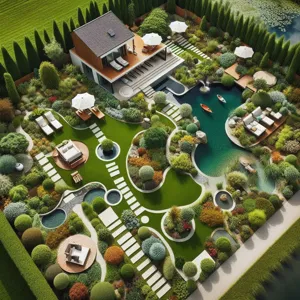
Symmetry, straight lines, clipped hedges, geometric beds and a clear central axis, as in French and Italian classical gardens. It looks impressive in front of traditional houses but needs regular trimming.
English cottage
Dense, informal planting with flowers spilling onto paths: roses, foxgloves, hollyhocks, lavender, herbs. It looks relaxed and romantic, but keeping it looking full takes ongoing work.
Modern or contemporary
Clean lines, limited plant palettes repeated in blocks, and hard materials like concrete, steel, large-format pavers and gravel. Ornamental grasses and architectural plants such as agave or yucca are common. It suits modern architecture and can be relatively low maintenance.
Japanese
Inspired by nature in miniature: rocks, raked gravel, water, moss, maples, pines and bamboo, arranged with careful asymmetry. Stone lanterns and bridges are typical features. The style values calm and seasonal change. Done well, it requires careful pruning.
Mediterranean
Warm-colored walls, terracotta pots, gravel, olive trees, rosemary, lavender and other drought-tolerant plants. It fits hot, dry summers naturally.
Xeriscape
A design approach rather than a look: it minimizes the need for irrigation by using drought-tolerant plants, mulch and efficient watering. It is especially relevant in the western US, where many water utilities offer rebates for replacing lawns. It does not have to mean gravel and cactus; it can be lush with the right plants.
Native and prairie gardens
Built mainly on plants native to your region: wildflowers and grasses in a meadow or prairie, or ferns and shrubs in a woodland garden. They support pollinators and birds and, once established, usually need less water and fertilizer.
Choosing a style
- Match the house: a formal garden can look odd in front of a mid-century ranch, and vice versa.
- Match the climate: a cottage garden in a desert needs a lot of water.
- Be honest about maintenance: clipped hedges and flower borders need time.
Easy plants that fit several of these styles are listed in the best plants for a low-maintenance garden. Landscaping is also the main tool for increasing curb appeal.