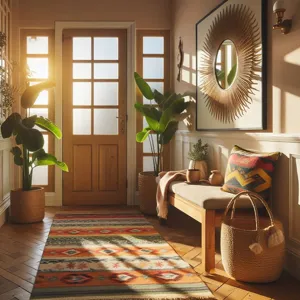
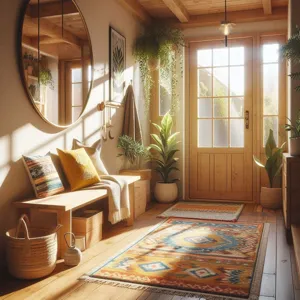
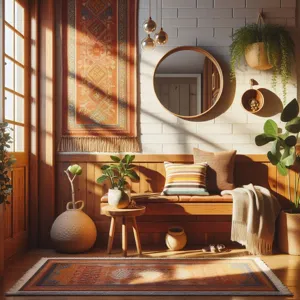
Your entryway is the most important transitional space in your home. It serves two masters: it must be a high-functioning drop zone for daily chaos and the first impression for guests. If your entrance feels like a graveyard for shoes and mail, you are losing valuable square footage that dictates the mood of your entire living space.
The golden rules of spatial planning
Before buying decor, watch how you move through the door. Most entryways fail because furniture fights the traffic flow. You should aim for a clear path of at least 36 inches to allow people to move comfortably without bumping into walls. If you shimmy sideways to pass a console, that piece is too deep for your space.
Define the Drop Zone: If you lack a dedicated spot for keys and wallets, they will inevitably litter your kitchen counter. Install a floating shelf or a shallow console table with a tray right by the door.
The Vertical Advantage: When floor space is tight, look up. Wall-mounted hooks outperform coat racks because they save floor footprint. Use hooks at varying heights to accommodate both adult coats and items for children.
Mirror Logic: Place a mirror opposite the door to bounce natural light into the space. This makes a cramped hallway feel twice as large. It also serves as a final check point before you exit the house.
Lighting as an emotional trigger
Credit : whatcanu.com
A dark, dingy entryway kills a first impression immediately. Avoid the hospital corridor effect caused by harsh, overhead-only lighting. You need to layer your light to create depth and warmth. Think of lighting layers like a balanced meal: you need the main course, but also the seasoning to make it palatable.
Ambient Light: Replace generic cool bulbs with warmer color temperatures, ideally between 2700K and 3000K. This mimics the soft glow of sunset and creates an immediate feeling of relaxation.
Task Light: Use a dimmable table lamp on your console. It provides a localized glow that feels residential rather than institutional.
The Automatic Hack: Install a motion-sensor light. Having the lights turn on automatically when you walk in with groceries is a luxury that increases the perceived quality of your home.
Solving the storage puzzle with hard data
Clutter is the enemy of a welcoming space. In a standard 50-square-foot entry, you should aim for 70% of storage to be hidden behind doors or inside opaque bins. Visual noise—like a pile of sneakers—prevents the room from feeling intentional.
The Bench Strategy: If your space is tight, a bench with deep drawers is non-negotiable. It acts as seating for putting on shoes and a massive hidden bin for items that do not belong in the hallway.
Avoid Open Shelving: Open shelves look great in magazines but become magnets for mess in real life. Use closed cabinets or baskets to hide daily chaos like umbrellas or extra bags.
The 70/30 Rule: Keep 70% of your items behind closed doors. The remaining 30% can be decorative, such as a single art piece or a plant, to keep the space from looking too sterile.
Configuration hacks for atypical spaces
Credit : whatcanu.com
Not every home has a grand foyer. If you have an awkward layout, you must adapt your furniture choices to the geometry of the room.
The Long Narrow Hallway: Use a very slim profile console (under 10 inches deep) with wall-mounted storage to keep the floor clear. Use a runner rug to guide traffic flow and add visual warmth to a cold floor.
The Door-Opens-Directly-Into-Living-Room: Create a ‘visual transition’ by using a semi-transparent screen or a tall, open-backed bookshelf. This forces a psychological break between the outside world and your living area without blocking light.
The Corner Entry: Use an L-shaped bench or a corner cabinet. This maximizes an often-neglected area and provides a natural anchor for your drop zone.
The sensory experience of arriving home
A welcoming entryway engages more than just sight. The smell of a home is often the first thing people notice upon entry. Avoid heavy synthetic plug-ins that cause headaches. Opt for a reed diffuser with subtle notes of sandalwood or cedar for a natural, clean atmosphere.
Credit : whatcanu.com
Adding Life: Incorporate at least one living element. If you have low light, a snake plant is nearly indestructible and adds a clean, architectural look. Use a pot with a drainage tray to protect your floors from water damage.
Routine for long-term success
Even the best-designed entry will collapse without a maintenance system. Designate 5 minutes every Friday to clear out the dead weight. This includes junk mail, dry cleaning slips, and items belonging in other rooms. If you treat your entryway as a transition zone rather than a storage locker, it stays functional. A clear door leads to a peaceful home.