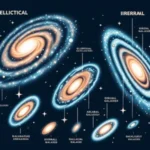
The Evolution of Astronomy: From Naked-Eye Mapping to Deep Space
The history of astronomy is not a collection of dusty facts; it is the timeline of humanity upgrading its hardware. Think of it as a software update for our species: we started by observing the sky with our own eyes and ended up decoding the radiation signatures of the early universe. Understanding this history is essential because it reveals how we moved from interpreting celestial patterns as divine warnings to treating them as predictable physics.
The Era of Naked-Eye Observation: Navigation and Survival
Before the telescope, astronomy was a survival tool. Early civilizations like the Babylonians, Egyptians, and Maya treated the sky as a giant, ticking clock. They didn’t have GPS or almanacs, so they used the stars to track agricultural cycles. If you missed the heliacal rising of Sirius in Egypt, you missed the Nile’s flood, and your harvest failed. This wasn’t just hobbyist stargazing; it was the foundation of civilization.
- Precision tools: They built structures like the Egyptian pyramids or the Mayan El Caracol to align with specific stellar positions.
- Pattern Recognition: They mapped the zodiac not for horoscopes, but to identify the predictable paths of planets against the fixed stars.
- The Logic: They proved that the universe was ordered, not chaotic.
The Greek Shift: Geometry Meets the Heavens
Greek thinkers took the raw data of the Babylonians and applied mathematics to it. Ptolemy, for example, built the geocentric model. Think of this model like a complex mechanical watch; it was incredibly intricate and mathematically accurate at predicting planet movements, even though the central premise—Earth as the center—was wrong. It functioned because they used ‘epicycles,’ which are like loops within loops, to force the math to fit their observation.
Error to avoid: Do not assume these thinkers were foolish. They were constrained by the lack of optical tools. They were building a map based on the only perspective available to them: the ground beneath their feet.
The Renaissance: Breaking the Geocentric Habit
The transition from the geocentric (Earth-centered) to the heliocentric (Sun-centered) model was the most significant intellectual earthquake in history. Nicolaus Copernicus didn’t just propose a new theory; he forced humanity to accept that we were not the center of the stage. Galileo Galilei then brought the hardware. When he turned his telescope to Jupiter and saw moons orbiting it, he provided the ‘smoking gun’—evidence that not everything revolved around the Earth.
The Industrial Leap: Spectroscopy and the Laws of Motion
In the 19th century, astronomy merged with physics. Before this, we knew where stars were, but we had no idea what they were. Spectroscopy changed everything. Think of it as a barcode scanner for light: by splitting starlight into a spectrum, astronomers could identify chemical elements. We suddenly realized stars weren’t just lights; they were massive nuclear furnaces.
- Isaac Newton’s Contribution: He defined the rules of the game with gravity. If you know how fast a planet is moving, you can use Newton’s laws to calculate exactly where it will be in a hundred years.
- Photography: The introduction of long-exposure film allowed astronomers to ‘see’ things that were too faint for the human eye, essentially giving us a longer shutter speed for the universe.
Modern Frontiers: The Digital and Invisible Universe
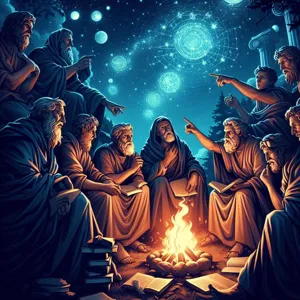
We are currently in the age of big data and invisible light. Modern astronomy doesn’t just look at visible light; it uses X-rays, infrared, and radio waves. The Hubble and James Webb Space Telescopes are essentially time machines. Because light takes time to travel, looking at distant galaxies is literally looking into the past. We are now mapping the expansion of the universe and probing the nature of Dark Matter—the mysterious substance that acts as the invisible glue holding galaxies together.
Practical Takeaway: How to Engage with Astronomy Today
You don’t need a professional observatory to participate. The entry bar for astronomy has dropped significantly. If you want to contribute or simply understand the field better:
- Use Citizen Science: Projects like Galaxy Zoo allow volunteers to classify galaxies online, providing real data to professional researchers.
- Start with Binoculars: A pair of 10×50 binoculars is often better for a beginner than a cheap, wobbly telescope. You will see more of the Moon’s craters and the moons of Jupiter.
- Learn the Sky, Not Just the Tech: Use apps to learn constellation patterns first. Understanding the movement of the sky is the fundamental skill that linked the ancient Egyptians to modern astrophysicists.
The history of astronomy shows a clear trend: as our tools get better, our ego gets smaller, but our understanding of the universe gets infinitely larger. We moved from the center of the universe to a small rock orbiting an average star in a vast, expanding cosmos. That isn’t a demotion; it is an invitation to explore something much bigger than ourselves.
Contenu mis a jour le 2026-08-22