
What Are the Latest Safety Features in Cars?

Modern vehicle safety has shifted from passive protection to active intervention. Today, cars act as intelligent assistants that scan the road faster than any human. Understanding these features is essential for choosing a vehicle that provides actual risk mitigation rather than just marketing hype.
The Impact of Automatic Emergency Braking (AEB)
AEB is the most effective safety innovation of the last decade. It uses radar and camera sensors to calculate the closing speed between you and the vehicle ahead. If a collision is imminent and you fail to react, the car brakes automatically.
Data from the Insurance Institute for Highway Safety (IIHS) shows that vehicles equipped with front crash prevention systems experienced 50% fewer rear-end collisions. Think of this system like a defensive athlete who anticipates a play before the ball is even thrown. It reduces kinetic energy before impact, which can turn a high-speed collision into a minor incident.
Critical Selection Criteria for Buyers
- Pedestrian and Cyclist Detection: Ensure the system identifies more than just vehicles. Modern sensors must recognize vertical objects like humans and bikes.
- Low-Light Performance: Ask if the AEB works effectively in low light. Some entry-level systems struggle when visibility is poor, whereas premium systems use infrared or advanced night vision.
Lane Support Systems: Beyond Warnings
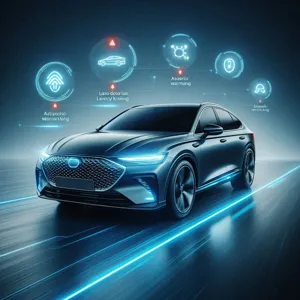
Lane Keeping Assist (LKA) has moved beyond simple alerts. While Lane Departure Warning (LDW) simply notifies you if you drift, LKA applies active steering torque. It acts like a steady hand on the wheel that prevents you from wandering out of your lane due to fatigue or distraction.
Field experience reveals a common mistake: drivers often treat LKA as an autopilot feature. LKA is designed only to nudge the car back into the lane. It cannot navigate complex curves or handle sudden road hazards. Always keep your hands on the steering wheel, as these systems are designed as a safety net, not a replacement for driver attention.
Blind Spot Monitoring and Sensor Fusion
Blind Spot Monitoring (BSM) uses radar sensors located in the rear bumpers to detect vehicles in your blind zones. This is particularly vital on high-speed highways where peripheral vision often fails to identify cars approaching from behind.

To ensure high reliability, look for systems that use sensor fusion. Sensor fusion combines data from cameras and radar to cross-verify surroundings. If a camera is obscured by dirt or sun glare, the radar serves as a backup. This prevents the system from triggering false positives, such as braking for shadows or lane lines.
The Practical Reality of Sensor Maintenance
Safety technology is an investment in risk mitigation, but it carries a maintenance cost. Sensors are often embedded in the windshield, front grille, or bumpers. If you are involved in a minor fender bender, these components must be recalibrated.
Field experience shows that many aftermarket repair shops fail to perform this recalibration. This can render your safety systems useless or cause them to activate erratically. Always confirm with your service center that they are capable of recalibrating Advanced Driver-Assistance Systems (ADAS) before authorizing bodywork.
Vehicle-to-Vehicle (V2V) Communication

The next major leap in safety is V2V communication. This allows vehicles to broadcast their speed, position, and braking status to one another. Imagine a car three vehicles ahead losing traction on black ice. Through V2V, your car receives this data and adjusts your traction control before you even reach the patch of ice.
While this technology is still scaling, vehicles with V2V capability create a connected network. This network expands your visibility beyond the line of sight of your physical sensors. When shopping, prioritize brands investing in connected car architecture to future-proof your purchase.
How to Verify Safety Claims
Do not rely on the sticker price or manufacturer promises. Focus on objective third-party testing. Use these resources to audit your potential purchase:
- IIHS Top Safety Pick+: This is the gold standard for crashworthiness. It requires top scores in crash testing and high-quality headlight ratings.
- NHTSA 5-Star Ratings: Use the National Highway Traffic Safety Administration database to view rollover risk and side-impact performance.
- Standard vs. Optional: Check if the safety features you want are standard or buried in expensive, optional technology packages.
By focusing on these metrics, you shift from a passive buyer to an informed driver. Advanced safety systems are your digital guardians; verify their quality, maintain their sensors, and prioritize systems that provide real-world intervention when your focus inevitably wavers.
Content updated on 2026-09-12