Adopt a Modular Cooking System

Feeding a family is not about elaborate recipes. It is about logistics. Treat your kitchen like a professional assembly line. When you cook for three or more people, you must move from specific recipes to a modular framework. This shift removes the daily pressure of deciding what to make.
The Sunday Prep: Component Cooking
Do not cook full meals on Sunday. Instead, prep individual components that act as building blocks for the week. Think of these as your kitchen capsule wardrobe. You should prepare 3kg of protein, 2kg of pre-cut vegetables, and a large batch of grains.
- Protein foundations: Roast chicken thighs or tofu blocks. Use them for Monday tacos, Wednesday grain bowls, or Friday salads.
- Vegetable bases: Roast two trays of broccoli or carrots. They are ready to be tossed into pasta or eaten as a quick side.
- Grain silos: Cook a double batch of quinoa or brown rice. This provides the volume needed to make a light meal feel like a complete dinner.

Field Experience: I once spent four hours every Sunday cooking full meals. By Wednesday, everything tasted stale. Switching to component prep cut my total kitchen time to two hours and increased ingredient freshness.
Equip Your Kitchen for Speed
Kitchen gadgets often clutter counters without adding value. You only need tools that transition you from active labor to passive waiting. If you are standing at the stove for 45 minutes, your system is failing.
- The Pressure Cooker (Instant Pot): This is your best tool for tough cuts of meat or beans. Put ingredients in at 5 PM, and you have a tender stew by 5:45 PM without hovering.
- Sharp Chef’s Knife: A dull knife is a time sink. It makes chopping onions feel like a chore. Keep your knife honed; a sharp blade cuts prep time in half.
- The Food Processor Slicing Disk: Use this to shred cabbage or carrots for slaws in 30 seconds. Manual shredding is a waste of time.
The Three-Component Rule
Decision fatigue is the enemy of family cooking. Stop browsing recipe websites at 6 PM. Every single meal should contain three items: a protein, a vegetable, and a complex carbohydrate. If you have those three, you have a successful dinner.
Common Pitfall: Avoid trying to replicate restaurant-style multi-course meals. A pan-seared pork chop, a bag of steamed frozen peas, and a side of quick-cook couscous is a nutritionally sound, 15-minute meal.
Build a Pantry Safety Net
You will have days when you are too tired to cook fresh ingredients. A stocked pantry prevents the impulse to order expensive, unhealthy takeout. Treat your pantry like a bank account; always keep a minimum balance of these items.
- Canned Legumes: Chickpeas and black beans are instant protein sources for soups or quick salads.
- Jarred Aromatics: Keep high-quality pesto, curry paste, or marinara sauce on hand. These add flavor to bland ingredients in seconds.
- Frozen Produce: Keep bags of spinach, corn, and peas in your freezer. They are frozen at peak ripeness and retain more nutrients than refrigerated produce that sits for days.
Involve the Family Without the Chaos
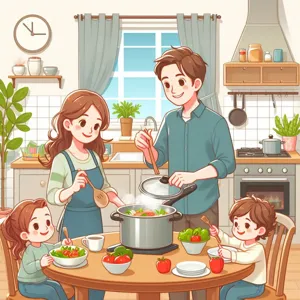
Cooking with children often creates a mess, but it is an investment in their eating habits. If children help build the meal, they are 80% more likely to eat it without complaining. Assign roles based on age to keep the kitchen flowing.
- Ages 4-7: Let them wash vegetables or tear lettuce for salads.
- Ages 8-12: Let them measure ingredients or set the table.
- Ages 13+: Let them take responsibility for the timer or chopping harder vegetables.

Error to Avoid: Do not try to teach complex techniques during the dinner rush. Keep their tasks simple so you can maintain your own efficiency.
The Clean-As-You-Go Workflow
Cleaning is the biggest barrier to cooking daily. If you face a mountain of dishes after eating, you will stop cooking. You must clean while the food is cooking, not after it is served.
- The One-Bowl Philosophy: Keep a large bowl on your workspace for all scraps. This keeps your cutting board clean and ready for the next task.
- The Dishwasher Pre-load: Empty your dishwasher before you start. Load dirty utensils immediately instead of letting them pile up in the sink.
- The Hot Water Soak: If a pan is crusted, fill it with hot soapy water the second you serve. By the time you finish eating, the crust will have softened, making cleanup a 10-second rinse.
Manage Your Recipe Library
Create a master list of 15 foolproof recipes that your family enjoys. Rotate these recipes every two weeks. You do not need hundreds of ideas. You need a reliable core list that you can execute with your eyes closed. This predictability turns cooking from a chore into a seamless habit.
Content updated on 2026-10-17