What Are the Best Cars for Fuel Efficiency on the Highway?
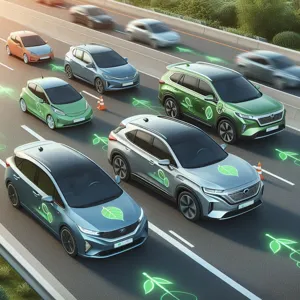
Choosing a vehicle for highway commuting is a different game than city driving. While hybrid systems shine in stop-and-go traffic, highway efficiency relies on aerodynamics, transmission gear ratios, and sustained engine performance. Selecting the right vehicle can save you between $400 and $800 annually in fuel costs depending on your yearly mileage.
Top 10 Vehicles for Highway Fuel Efficiency

These vehicles are selected based on their real-world highway performance and aerodynamic engineering. The following figures represent standard EPA highway estimates.
- Hyundai Ioniq 6 (140 MPGe): Its teardrop shape is the gold standard for aerodynamics. At 70 mph, this shape minimizes wind resistance, which is the primary enemy of electric range.
- Toyota Prius (53 MPG): A masterclass in drag reduction. Its low stance and tapered rear end allow it to slice through the air with minimal parasitic loss.
- Hyundai Elantra Hybrid (58 MPG): This model uses a dual-clutch transmission. It provides a direct mechanical link, preventing the energy ‘slippage’ often found in traditional continuously variable transmissions.
- Kia Niro (54 MPG): Features active grille shutters. Think of these as blinds on a window; they close at high speeds to keep air flowing around the car rather than into the engine bay, reducing turbulence.
- Toyota Corolla Hybrid (51 MPG): The secret here is low curb weight. Less mass means the engine requires less energy to maintain momentum once you reach cruising speed.
- Honda Civic (42 MPG): Honda uses turbocharging to allow for smaller engines that operate at lower RPMs during steady cruising. This keeps the engine ‘loafing’ comfortably while you maintain highway speed.
- Volkswagen Jetta (41 MPG): German engineering prioritizes tall final gear ratios. This allows the engine to stay in its peak efficiency zone at 75 mph without spinning unnecessarily fast.
- Mazda3 Sedan (36 MPG): Uses high compression technology. It extracts more power from every drop of fuel, effectively squeezing more energy out of the combustion process.
- Subaru Impreza (36 MPG): Includes an intelligent drivetrain that decouples the rear wheels during steady highway driving. This reduces the mechanical drag caused by spinning extra hardware.
- Toyota Camry Hybrid (53 MPG): Excellent power management that seamlessly blends electric and gas inputs. It keeps the gas engine in its most efficient load range throughout your trip.
The Physics of Highway Drag
On the highway, your car behaves like a cyclist. At low speeds, you expend energy moving the machine. At high speeds, you expend energy fighting the air. This force, known as aerodynamic drag, increases exponentially with speed. If you increase your speed from 65 mph to 75 mph, your engine must overcome roughly 30% more air resistance, leading to a significant drop in miles per gallon.
The Hidden Cost of Accessories

Never underestimate the impact of exterior additions. Roof racks and cargo boxes act like a sail on a boat. Even if they are empty, they can decrease your highway fuel efficiency by 10% to 15%. If you do not need the extra storage, remove it. A clean exterior profile is the cheapest modification you can make for fuel savings.
Field-Tested Strategies for Better MPG

You can improve the efficiency of your current vehicle by applying these professional techniques. These adjustments focus on reducing rolling resistance and engine load.
- Optimize Tire Pressure: Under-inflated tires increase rolling resistance, similar to riding a bike on soft sand. Check your door jamb sticker and maintain the manufacturer’s maximum recommended PSI to keep your contact patch consistent and efficient.
- Minimize Weight: Every 50 pounds of weight removed from your trunk improves fuel economy by roughly 1% to 2%. Treat your car like a cargo aircraft; only carry what is necessary for the trip.
- Master the ‘Pulse and Glide’ Technique: Avoid the accordion effect. If you constantly speed up to pass and then brake, you waste the kinetic energy you spent fuel to build. Maintain a set, consistent speed to keep engine load stable.
- AC vs. Windows: At highway speeds, keep your windows up. Open windows create significant drag, ruining your car’s aerodynamic design. Modern air conditioning systems are far more efficient at 70 mph than the wind resistance caused by open glass.
Common Mistakes to Avoid
Many drivers fall into the trap of buying a vehicle based on city MPG, only to be disappointed by highway performance. A tall SUV, regardless of its hybrid system, will never match the aerodynamic profile of a sleek sedan or hatchback. If your commute involves 90% highway driving, prioritize a vehicle with a low drag coefficient. Also, avoid aggressive driving behaviors; quick acceleration onto an on-ramp negates the benefits of a fuel-efficient engine. Smooth, predictable inputs are the key to maximizing your vehicle’s engineering potential.
Contenu mis a jour le 2026-08-23